Technical Articles & Insights

Magnetics Engineering Blog & Resources

Discover expert articles, design guides, and technical solutions for magnetic components, power electronics, and custom transformer applications.

Blog

2026 Best Custom Inductors and Chokes for Global Buyers

2026 Best Custom Inductors and Chokes for Global Buyers

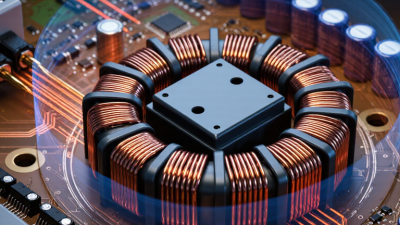
Selecting the right Custom Inductors and Chokes in 2026 requires more than comparing inductance values and unit prices. Global buyers must examine saturation current, temperature rise, winding resistance, insulation strength, and operating frequency. A compact ferrite choke may perform well in a medical power module, yet fail inside a hot automotive converter. Context changes everything. Ray Ridley, a respected power-electronics specialist, has often stressed, “The inductor is the most important component in a switching power supply.” This reminder remains highly practical. During real production reviews, engineers inspect core material, air gaps, wire temperature, and audible noise. They also check samples after repeated thermal cycles. A datasheet cannot reveal every weakness. Custom Inductors and Chokes can improve filtering, efficiency, and mechanical fit. However, customization is not automatically better. It may increase tooling costs, extend lead times, or create supply risks. Buyers should request verified test curves, prototype samples, quality records, and clear change-control procedures. Ask difficult questions early. The strongest suppliers explain their design assumptions. They identify tolerances. They discuss failure modes honestly. That transparency reflects genuine E-E-A-T, not polished marketing language. Still, no selection guide can replace application testing. A promising prototype may behave differently after enclosure assembly, vibration, or humidity exposure. Global procurement teams should compare engineering support, traceability, consistency, and total lifecycle value. The cheapest choke may become the most expensive decision.
Read more »
Oliver By:Oliver - October 15, 2026
What Are Dual Function Chokes and How Do They Work?

What Are Dual Function Chokes and How Do They Work?

Dual-Function Chokes help control unwanted electrical noise in power and signal circuits. They combine common-mode and differential-mode filtering within one compact component. This arrangement can reduce electromagnetic interference, protect sensitive electronics, and support compliance testing when designed correctly. However, their performance depends on frequency, current, wiring layout, and the surrounding filter network. Inside the component, separate windings or magnetic paths respond to different noise currents. Common-mode noise travels in the same direction through conductors, so the choke creates opposing magnetic effects against that interference. Differential-mode noise flows between conductors, producing a different magnetic response. A well-designed Dual-Function Chokes assembly uses this behavior to attenuate both noise types without seriously restricting normal power delivery. The principle sounds simple. Real circuits are less predictable. Engineers typically review impedance curves, rated current, voltage insulation, temperature rise, and saturation limits before selecting a part. For example, a choke installed near a switching converter may face sharp voltage edges and elevated ripple current. Its datasheet provides valuable guidance, but laboratory measurements remain important. Parasitic capacitance, PCB traces, connector placement, and enclosure design can change the final result. Even a suitable component may underperform when mounted poorly. This guide explains how Dual-Function Chokes operate, where they are commonly used, and which specifications deserve careful attention. It also considers practical testing methods, installation details, and possible design trade-offs. The goal is not to promise a universal solution. Instead, it offers a clear, evidence-based starting point for evaluating noise-control requirements in real equipment.
Read more »
Olivia By:Olivia - October 10, 2026
2026 Best Custom High Frequency Magnetics Manufacturers

2026 Best Custom High Frequency Magnetics Manufacturers

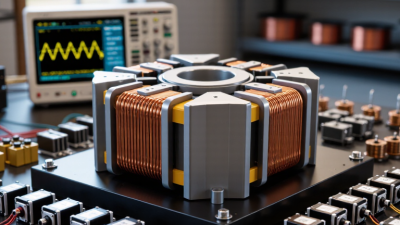
The 2026 market for Custom High Frequency Magnetics is becoming more demanding, not merely larger. Smaller converters, faster switching devices, and tighter thermal limits are reshaping supplier selection. A transformer that looks excellent on paper may still overheat beside a silicon carbide module. MarketsandMarkets’ 2024 Power Electronics Market report identifies rising demand for high-efficiency conversion across electric vehicles, renewable energy, data centers, and industrial automation. Yole Group’s recent power electronics analysis also highlights wide-bandgap semiconductors as a major driver of higher switching frequencies and greater power density. These trends create opportunities for specialized magnetic-component manufacturers. They also expose weak designs quickly. Dr. Charles R. Sullivan, a recognized researcher in power magnetics, has stated, “High-frequency magnetics design is fundamentally a trade-off between loss, size, and manufacturability.” That principle remains practical. A 100-kilohertz prototype can behave differently after production tolerances, insulation changes, or twenty minutes of thermal cycling. Experience matters here. This guide evaluates the 2026 Best Custom High Frequency Magnetics Manufacturers through engineering capability, material selection, winding precision, testing, documentation, and delivery reliability. It considers ferrite geometry, leakage inductance, copper losses, creepage distance, and thermal performance. Certifications matter, but they do not replace measured data. The category itself is imperfectly reported. Public market studies rarely isolate custom high-frequency magnetics, so comparisons require careful interpretation. That limitation deserves attention. A credible manufacturer should provide test curves, sample evidence, failure analysis, and realistic efficiency figures—not attractive claims alone.
Read more »
Olivia By:Olivia - October 5, 2026
How to Choose Custom Audio Transformers for Global Sourcing?

How to Choose Custom Audio Transformers for Global Sourcing?

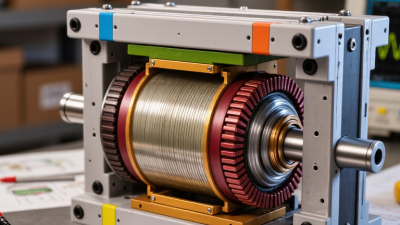
Choosing Custom Audio Transformers for global sourcing requires more than comparing prices and catalog photographs. These components influence signal clarity, impedance matching, noise levels, and long-term equipment reliability. A transformer may look suitable on paper, yet perform poorly after installation. Small details matter. Experienced buyers begin with measurable requirements. Define impedance, turns ratio, frequency response, power rating, mounting dimensions, and insulation needs. Ask suppliers for test reports, winding specifications, sample units, and production tolerances. A clear technical drawing prevents costly misunderstandings across languages and time zones. It also gives engineers a reliable basis for comparison. Supplier evaluation deserves equal attention. Review manufacturing experience, quality controls, material traceability, and inspection procedures. A capable factory should explain its core material, copper wire grade, shielding method, and final testing process. Request an independent sample review when the application is sensitive. Check packaging, lead times, minimum order quantities, and communication practices before signing a purchase agreement. No sourcing plan is perfect. Specifications may change after testing. A sample can pass laboratory checks but reveal hum during field use. That possibility deserves honest attention. Keep a small pilot order before committing to larger volumes. Record test results, corrective actions, and supplier responses. This evidence supports better decisions and strengthens accountability. Global sourcing also requires careful documentation. Confirm product labeling, import paperwork, electrical safety expectations, and destination-market requirements with qualified professionals. Reliable sourcing is not simply about finding Custom Audio Transformers at the lowest cost. It is about balancing performance, consistency, compliance, service, and total ownership risk. That balance protects both product quality and customer trust.
Read more »
Oliver By:Oliver - September 30, 2026
Best Wall Plug In Power Supplies Supplier in China?

Best Wall Plug In Power Supplies Supplier in China?

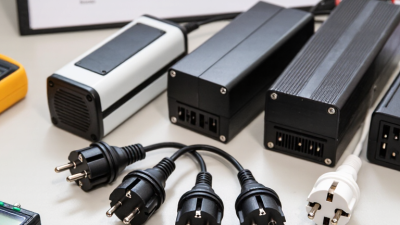
Choosing the best supplier of Wall Plug-In Power Supplies in China takes more than comparing prices. A reliable partner should explain product specifications clearly, provide traceable test documentation, and answer practical engineering questions. Small details matter: output voltage and current, plug type, cable length, enclosure temperature, and performance under your actual load. Ask for a sample before approving a large order. Then check its labeling, dimensions, connector fit, and operating temperature in your own application. Look beyond polished catalogs. Request current quality certificates and test reports, and confirm that they match the factory, product model, and destination market. Ask how incoming components are inspected and how production batches are tracked. A capable supplier should describe these steps without making vague promises. Response time matters, too. So does consistency. There is no single supplier that suits every buyer. A compact adapter for a retail device may need different testing and packaging from a power supply used in industrial equipment. Compare lead times, minimum order quantities, customization options, warranty terms, and communication across several candidates. If answers conflict, pause and ask for clarification. That hesitation can save time later. I would not treat the lowest quote as proof of value; hidden differences in components or testing may affect reliability. The sections ahead outline practical ways to assess Chinese manufacturers and make a more informed shortlist.
Read more »
Oliver By:Oliver - September 25, 2026
Why Choose Switch Mode Power Supplies for Global Buyers?

Why Choose Switch Mode Power Supplies for Global Buyers?

For global buyers, selecting a power supply is not merely a price comparison. It affects product safety, operating stability, energy use, and service costs across different markets. Switch-Mode Power Supplies offer high efficiency, compact construction, and flexible voltage conversion for industrial equipment, medical devices, telecom systems, and consumer electronics. The practical difference is visible on the factory floor. A smaller enclosure can simplify installation. Lower heat output can extend component life. A wide input range can support equipment used across regions with different mains conditions. Still, specifications alone do not tell the whole story. Buyers should examine efficiency curves, standby consumption, electromagnetic compatibility, protection functions, certifications, warranty terms, and technical support. Bob Mammano, a longtime power-management engineer and educator, once stated, “The power supply is the heart of any electronic system.” That view remains useful today. A reliable supply supports every circuit downstream. A weak choice may create noise, overheating, unexpected shutdowns, or expensive redesign work. Experience also teaches caution. The cheapest unit may not deliver the lowest ownership cost. A familiar brand may still offer the wrong input range. Even a well-tested model can require regional validation. These details are easy to overlook. They deserve attention. This guide explains why global buyers continue choosing Switch-Mode Power Supplies. It considers efficiency, adaptability, reliability, compliance, sourcing, and long-term support. The goal is not to promise a perfect answer. Real applications differ. Better decisions come from matching verified performance with actual operating conditions.
Read more »
Ethan By:Ethan - September 20, 2026