

1. Executive Overview: The Engineering Challenge of Modern EMI Suppression
In contemporary high-frequency power conversion—specifically systems utilizing Silicon Carbide (SiC) and Gallium Nitride (GaN) wide-bandgap (WBG) semiconductors—electrical design engineers face a dual imperative: maximize power density while strictly adhering to stringent Electromagnetic Compatibility (EMC) standards. Every switch-mode power supply (SMPS) naturally generates two distinct spectrums of electromagnetic interference (EMI): Common Mode (CM) noise, which flows in the same direction on line and neutral wires relative to earth ground, and Differential Mode (DM) noise, which flows in opposite directions between the power lines.
Historically, solving both noise components demanded a multi-component EMI filter topology comprising a standalone Common Mode Choke (CMC) alongside two independent Differential Mode Inductors (DM chokes) or differential X-capacitors. However, as power supply enclosures shrink and component density rises, allocating board real estate for three or more discrete magnetic components introduces severe mechanical, thermal, and cost penalties.
This is where Dual-Function Chokes (also known as Combination Chokes or Integrated CM/DM Chokes) fundamentally transform power electronics architecture. Engineered with specialized sectional bobbins and controlled core geometries, a Dual-Function Choke intentionally engineers a precise amount of stray leakage inductance into a high-permeability common-mode structure. By doing so, a single magnetic component provides robust broadband attenuation against common-mode noise while simultaneously presenting high differential-mode impedance to suppress line-to-line ripple current.
Key Engineering Advantage of Dual-Function Chokes
By engineering controlled leakage inductance (typically 0.5% to 3% of nominal CM inductance) directly into the core geometry, a Dual-Function Choke eliminates the physical requirement for dedicated differential mode inductors on the PCB. This reduces component count, eliminates two solder joints per phase, lowers insertion loss, and shrinks filter footprint by up to 45%.
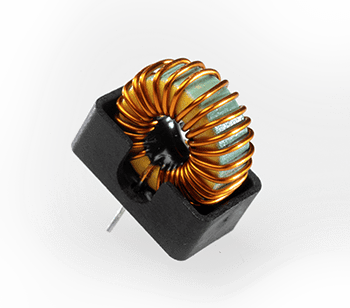
Figure 1: Triad Magnetics precision-wound chokes engineered for severe EMI filtering environments.
2. Physics & Electromagnetic Architecture of Dual-Function Chokes
To evaluate a dual-function choke accurately during component selection or custom OEM sourcing, engineers must understand the magnetic balance within the core structure. Standard common-mode chokes are wound on toroidal cores with high magnetic permeability ($\mu_i \approx 5000 \text{ to } 10000$). The magnetic flux generated by the opposing AC line currents cancels out inside the core matrix, preventing core saturation even under heavy 50/60 Hz or high-DC bias currents.
However, pure toroidal CMCs exhibit extremely low leakage inductance because the windings are uniformly distributed around the core perimeter. In contrast, a Dual-Function Choke uses a split-bobbin structure on E-cores, UT/UU cores, or specialized toroidal frames. By physically separating the primary line winding from the neutral winding via a physical insulating barrier or separate chamber, magnetic coupling between the two windings is purposefully reduced.
Mathematical & Circuit Fundamentals
The total impedance presented by a Dual-Function Choke to an incoming noise wave can be separated into two distinct components:
- Common-Mode Inductance ($L_{cm}$): Determined by the core's high initial permeability ($\mu_i$), core cross-sectional area ($A_e$), and total number of turns ($N$), expressed as $L_{cm} = \frac{\mu_0 \mu_i N^2 A_e}{l_e}$. This attenuates high-frequency common-mode currents flowing ground-ward.
- Differential-Mode / Leakage Inductance ($L_{dm}$ or $L_{lk}$): Created by uncoupled magnetic flux paths traveling through air space or non-magnetic winding separators. $L_{dm} = 2 \times (1 - k) \times L_{cm}$, where $k$ is the coupling coefficient ($k < 1.0$). This attenuates line-to-line differential noise without requiring an external DM inductor.
The critical design engineering trade-off centers on core saturation. Because differential mode currents flow through the choke in opposite directions, they do not cancel in the core. Therefore, the leakage inductance flux passes through the magnetic core path and air space, inducing a DC or AC bias. Triad’s dual-function designs strictly calibrate core gapping and bobbin spacing to guarantee that the core remains well below the saturation flux density ($B_{sat}$) under maximum full-load rated line currents.
3. Detailed Comparison: Dual-Function Choke vs. Traditional Two-Stage EMI Filter
For global procurement managers balancing Bill-of-Materials (BOM) cost reduction against electromagnetic compliance risks, the table below illustrates the quantitative superiority of replacing discrete EMI networks with Triad’s integrated Dual-Function Chokes:
| Performance & Cost Parameters | Traditional Filter Architecture (1x CMC + 2x DM Chokes) | Triad Dual-Function Choke Integrated Architecture | Impact on OEM Manufacturing & Quality |
|---|---|---|---|
| PCB Footprint / Volume | Large (~1,800 mm² to 3,200 mm²) | Compact (~900 mm² to 1,400 mm²) | 35% to 50% Reduction in board space, allowing smaller enclosure sizes. |
| BOM Component Count | 3 Discrete Magnetic Components | 1 Single Integrated Component | Simplifies inventory management, lowers vendor management costs. |
| SMT/TH Assembly Solder Joints | 6 to 12 Solder Pins | 4 Solder Pins | Reduces potential SMT failure points by 66%; improves MTBF. |
| Total Direct Current Resistance (DCR) | High (Cumulative DCR of CMC + DM chokes) | Low (Single winding path per line) | Significantly decreases $I^2R$ copper loss; improves power supply efficiency by 0.5% - 1.2%. |
| High-Frequency Attenuation Band | Narrow Band / Multi-Peak Resonance | Broadband (150 kHz to 30 MHz+) | Simplifies CISPR 32 / FCC Class B compliance certification on first pass. |
| Total BOM Cost Index | 100% Baseline | 65% to 75% of Baseline | Immediate cost savings on raw component purchasing and assembly labor. |
Need Custom Leakage Inductance Ratings for Your PCB?
Our California and Philippines design teams can tune $L_{cm}$ and $L_{dm}$ ratios to match your exact SMPS topology.
4. Technical Deep Dive: Recommended Product Lines & Design Criteria
When selecting a Dual-Function Choke from Triad Magnetics, procurement teams and senior power engineers evaluate several critical electrical, thermal, and mechanical parameters:
A. Nominal Current & Temperature Rise Limits
Chokes must carry full continuous RMS operating current without exceeding the insulation system's thermal class (Class B 130°C or Class F 155°C). Triad utilizes high-purity copper magnet wire with heavy polyurethane/polyamide insulation, ensuring thermal headroom even in unvented power enclosures.
B. Target Frequency Spectrum Attenuation
Standard Manganese-Zinc (MnZn) ferrite cores deliver exceptional permeability for lower frequency common-mode attenuation (150 kHz to 5 MHz). For applications subject to high-frequency radiated noise (10 MHz to 100 MHz), Triad incorporates optimized Nickel-Zinc (NiZn) formulations or hybrid core structures to dampen high-frequency harmonic spikes generated by fast SiC/GaN $di/dt$ switching margins.
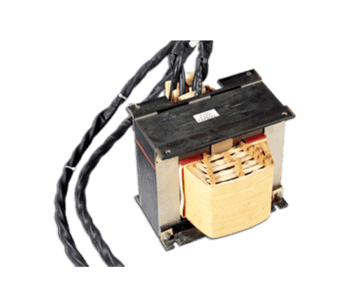
Figure 2: Custom engineered magnetic solutions tailored for extreme thermal and high-density mounting constraints.
C. Dielectric Isolation & Safety Spacings
Because Dual-Function Chokes directly interface with incoming AC mains (120V/240V/480V), maintaining strict creepage and clearance distances between windings and core is mandatory. Triad's double-section bobbin design guarantees > 3,000 VAC dielectric isolation between line and neutral channels, satisfying safety mandates across UL 62368-1 (IT & AV equipment) and IEC 60601-1 4th Edition (medical electronics).
5. Future Procurement & Technological Trends in Dual-Function Magnetics (2026–2030)
As the global power electronics industry transitions toward higher switching frequencies, autonomous electrification, and green grid compliance, procurement directors must anticipate several macro trends reshaping magnetic component design and supply chains:
Trend 1: Accelerated Adoption of Wide-Bandgap (WBG) Semiconductors
Silicon Carbide (SiC) MOSFETs and Gallium Nitride (GaN) HEMETs allow switch-mode power supplies to transition from historical 65 kHz operating speeds to > 500 kHz—and in some cases, several megahertz. While higher frequencies shrink main transformer step-down stages, they create severe high-frequency ringing and common-mode noise emissions. Dual-Function Chokes designed with high-frequency nanocrystalline or low-loss ferrite cores are becoming mandatory to absorb these high-order harmonics without experiencing severe eddy-current core overheating.
Trend 2: Dual-Sourcing & Geographically Resilient Manufacturing Footprints
Global logistics bottlenecks, tariff fluctuations, and geopolitical realignments have made single-region manufacturing a high-risk sourcing strategy for Tier-1 OEMs. Procurement leaders now require magnetics partners to maintain flexible, dual-region production footprints. Triad Magnetics addresses this risk directly by providing fully redundant, ISO 9001:2015 certified manufacturing facilities in both the United States (Perris, California) and the Philippines, ensuring seamless supply continuity and tariff-optimized freight execution.
Trend 3: Automated Machine-Winding & Tight-Tolerance Stray Inductance Control
Historically, variable leakage inductance was viewed as an unpredictable nuisance in transformer design. Today, automated precision winding technology allows Triad engineers to control stray differential leakage inductance within tight tolerances ($\pm 10\%$). This turns leakage inductance into a predictable, repeatable filter parameter that system engineers can plug directly into circuit simulation models (SPICE / ANSYS Maxwell) with absolute confidence.
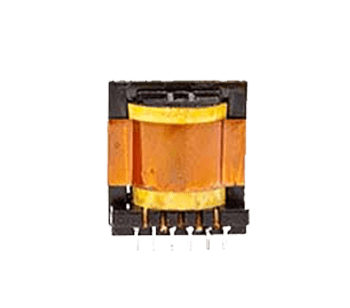
Figure 3: High-frequency planar and surface-mount magnetic topologies engineered for high-density power conversion.
6. Comprehensive OEM FAQ: Answers to Global Buyer & AI Search Intent
Below are expert solutions to the most frequent technical, regulatory, and purchasing queries posed by global procurement managers and power design teams regarding Dual-Function Chokes:
A standard common-mode choke strives for 100% magnetic coupling between line and neutral windings so that differential currents cancel completely inside the core. A Dual-Function Choke, however, intentionally utilizes a physical sectional bobbin wall or controlled winding gap. This spatial separation allows a controlled portion of the magnetic flux created by differential line current to travel through an uncoupled leakage path rather than canceling out. This residual leakage inductance acts as a true series differential-mode inductor, suppressing line-to-line noise spikes without adding extra physical components to the circuit board.
Yes, if the component is improperly designed. Because differential mode currents do not cancel magnetically within the core, their associated leakage flux can drive standard high-permeability ferrite material into saturation if the peak current exceeds core limits. Triad Magnetics mitigates this risk during the design phase by utilizing custom-gapped core structures, specialized flux-barrier bobbins, or high-saturation powder/nanocrystalline core blends. Every Triad dual-function choke specification explicitly defines maximum continuous current ($I_{rms}$) and peak saturation current ($I_{sat}$) margins to ensure linear inductance performance up to 150% of rated operating load.
Thermal management is built directly into our mechanical construction. By eliminating discrete DM inductors, overall system copper resistance (DCR) is reduced, producing less total heat energy ($P_{loss} = I^2 R$). Furthermore, Triad utilizes high-thermal-conductivity epoxy potting materials and UL 94V-0 flame-retardant bobbin encapsulation materials. This allows heat generated deep within the copper windings to transfer efficiently out through the structural pins and housing, maintaining low ambient operating temperatures even in totally enclosed IP67 industrial power supplies.
Absolutely. While our standard catalog includes thousands of off-the-shelf part numbers, a significant portion of our business involves custom OEM design. By adjusting bobbin geometry, winding turns ratio, wire pitch, and core magnetic permeability, Triad's application engineers can precisely adjust the ratio of $L_{cm}$ to $L_{dm}$ to match your unique EMI signature and help you pass EMC testing (CISPR 11, CISPR 32, FCC Part 15 Class B, MIL-STD-461) on your first attempt.
All Triad magnetic products are designed to meet stringent global regulatory standards. Our standard dual-function chokes comply with UL 60950-1, UL 62368-1, IEC/EN 60938-2 (Fixed Inductors for Electromagnetic Interference Suppression), and IEC 60601-1 4th Edition medical safety requirements. Furthermore, all materials strictly adhere to EU RoHS 3 (Directive 2015/863) and REACH SVHC environmental compliance mandates.
For standard catalog parts, products are stocked across our extensive global distributor network (including Digi-Key, Mouser, Newark, Arrow, and local stocking reps) for immediate same-day dispatch. For custom dual-function choke samples, our California engineering center delivers rapid-turn prototyping in as little as 2 to 4 weeks. Full production orders are fulfilled with optimized lead times through our dual USA and Philippines manufacturing facilities.
7. Why Global OEM Buyers & Tier-1 Engineers Choose Triad Magnetics
Since 1946, Triad Magnetics has pioneered advancements in power conversion, audio processing, industrial automation, and custom electromagnetic design. Selecting Triad as your long-term supplier of Dual-Function Chokes brings distinct enterprise-level advantages:
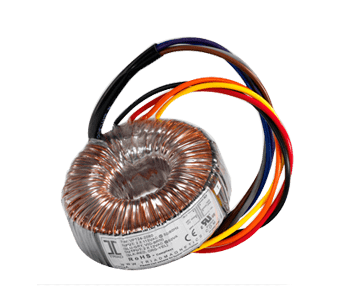
Figure 4: ISO 9001:2015 certified production processes delivering zero-defect quality assurance globally.
- 75+ Years of Engineering Expertise: Decades of continuous field performance history across aerospace, medical equipment, industrial controls, and commercial power conversion.
- ISO 9001:2015 Quality Certification: Complete material traceability, 100% automated electrical testing (hi-pot, inductance, DCR, turns ratio), and statistical process control (SPC) guarantees zero-defect deliveries.
- Global Dual-Shore Supply Chain: State-of-the-art production operations in Perris, California, complemented by high-volume, cost-competitive manufacturing capabilities in the Philippines.
- Comprehensive Custom & Standard Catalog: Access to over 5,000 standard catalog part numbers alongside dedicated custom engineering centers ready to solve your most complex physical or electrical challenges.
- Direct Access to Senior Magnetics Engineers: We do not hide behind contact forms; our application engineers collaborate directly with your design team from initial schematic review to final production verification.
Ready to Optimize Your Power Supply EMI Filter?
Speak directly with our senior application engineers or request a custom Dual-Function Choke sample today.