

Executive Overview: Semantic Architecture of Modern Custom Audio Transformers
In high-end professional audio systems, broadcast console architectures, ultra-clean line isolation interfaces, and mission-critical medical audio equipment, off-the-shelf catalog transformers frequently fall short. Modern audio systems demand exacting electrical parameters: linear response across extended bandwidths (10 Hz to 100 kHz ±0.2 dB), negligible insertion loss, extremely low phase shift, and immunity to ambient electromagnetic interference (EMI) and 60 Hz hum fields.
At Triad Magnetics, custom audio transformer design is both a science grounded in electromagnetic physics and an art refined through over seven decades of audio innovation. Since powering legendary mid-century studio consoles and classic tube amplification systems, Triad has set the benchmark for high-fidelity signal conversion. Today, our engineering team collaborates directly with global OEM procurement officers and senior audio hardware designers to build tailor-made magnetics that solve complex circuit challenges including ground-loop hum, signal degradation over long balanced cable runs, and harsh digital aliasing noise.
Why Custom Audio Magnetics Over Standard Catalog Parts?
Standard off-the-shelf transformers are manufactured using generalized compromise specs aimed at mass commercial viability. However, critical OEM applications demand specialized winding geometry, precise core alloy selection, and physical footprint customization:
- Optimized Turns Ratios & Impedance Matching: Achieve perfect source-to-load power transfer without sacrificing headroom or transient response.
- Tailored Core Saturation Limits: Select specific nickel-iron (Permalloy), silicon steel, or cobalt alloys to optimize low-frequency headroom or intentionally introduce controlled harmonic warmth.
- Advanced Electromagnetic Shielding: Integrate multi-layer electrostatic Faraday shields between windings alongside double Mu-Metal deep-drawn outer cans to achieve -90 dB to -115 dB hum rejection.
- Custom Form Factors & Termination: Potted PC-mount subminiature cans, chassis-mount wire lead configurations, or low-profile surface-mount (SMD) packages built to exact PCB mechanical constraints.
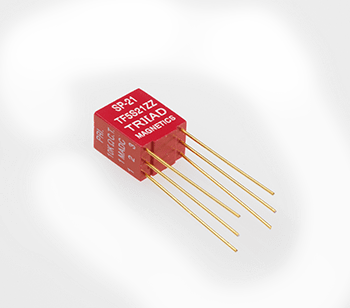
Figure 1: Triad Magnetics custom PC-mount and chassis-mount high-performance audio transformers.
Product Recommendations & Custom Configuration Matrix
Selecting the optimal custom audio transformer topology depends heavily on position within the signal chain, maximum signal level (dBu or Vrms), source impedance, and environmental EMI exposure. Below is a comprehensive architectural breakdown of custom audio transformer topologies designed and manufactured by Triad Magnetics.
1. Microphone Input & Preamp Transformers
Designed for extremely weak signal levels (-60 dBu to -20 dBu) where thermal noise, hum pickup, and phase accuracy are critical. Utilizes 80% Nickel (Mu-Metal) lamination cores to deliver ultra-high permeability at low flux densities.
- Impedance Ratios: 150Ω : 1.5kΩ, 200Ω : 10kΩ, or custom step-up ratios.
- CMRR: >105 dB at 60 Hz with electrostatic shields.
- Shielding: Triple-layer Mu-Metal nesting.
2. Line Level & Output Isolation Transformers
Built to handle robust signal levels (+18 dBu to +30 dBu) without low-frequency core saturation. Features grain-oriented silicon steel or 49% Nickel cores engineered for extended headroom at 20 Hz.
- Impedance Ratios: 600Ω : 600Ω, 10kΩ : 600Ω, 1:1 or 2:1 step-down.
- THD+N: < 0.005% at 1 kHz, +4 dBu.
- Frequency Bandwidth: 10 Hz – 80 kHz ±0.1 dB.
3. Direct Box (DI) & Instrument Transformers
Engineered to bridge high-impedance unbalanced instrument pick-ups (100kΩ to 1MΩ) into low-impedance balanced microphone preamplifiers (150Ω) while providing total DC galvanic isolation.
- Step-Down Ratio: 12:1 to 20:1 turns ratio.
- Input Loading: Ultra-high primary inductance to prevent bass loading.
- Enclosure: Shielded potted low-profile PCB cans.
Technical Selection Matrix for Custom Audio Transformers
Use the matrix below to evaluate custom engineering parameters against your specific OEM system requirements:
| Transformer Category | Typical Application | Core Material Alloy | Max Level @ 20Hz | THD+N (Typical) | Shielding Options |
|---|---|---|---|---|---|
| Mic Input / Step-Up | Pro Audio Preamps, Ribbon Mics | 80% Ni High-Perm Permalloy | -5 dBu to +4 dBu | < 0.01% @ 1kHz | Faraday Shield + Dual Mu-Metal Can |
| Line Output / Driver | Mixing Consoles, DAC Outputs | 49% Ni / Grain-Oriented Si-Steel | +24 dBu to +32 dBu | < 0.003% @ 1kHz | Hum-Bucking Winding + Steel Can |
| Balanced Line Matching | Broadcast, Telecom, DSP Boards | High-Perm Silicon Steel | +18 dBu | < 0.008% @ 1kHz | Internal Electrostatic Shield |
| Tube Amp Interstage/Output | High-End Audio Amplification | Grain-Oriented M6 Silicon Steel | Up to +45 dBu (50W+) | < 0.1% at rated power | Open Frame / End-Bells / Epoxy Potting |
| Medical Audio Isolation | Patient Monitoring, Audiology | 80% Ni Permalloy / Ferrite | +10 dBu | < 0.005% @ 1kHz | UL 60601-1 Reinforced Insulation (4kV) |
Engineering Deep Dive: The Physics of Low-Frequency Saturation & THD
A common pitfall in audio circuit design is underestimating transformer core volume when passing high-level low-frequency signals. Core saturation occurs when magnetic flux density (B) exceeds the core material's saturation flux limit (Bsat). Flux density is governed by Faraday's Law: B = V / (4.44 * f * N * Ae), where V is voltage, f is frequency, N is turns count, and Ae is cross-sectional core area.
As frequency f drops toward 20 Hz, required flux density scales rapidly. If the core saturates, third-harmonic distortion spikes exponentially. Triad Magnetics engineers mitigate this by selecting high-saturation silicon-iron or custom-laminated 49% nickel alloys combined with precision-interleaved winding geometry, ensuring clean bass response down to sub-audible frequencies without bulky packaging.
Global Procurement Trends & Supply Chain Resilience (2026–2030)
The global audio technology landscape is evolving rapidly under the combined influences of high-density electronic miniaturization, automated manufacturing, and heightened geopolitical supply chain scrutiny. Purchasing managers and sourcing directors at leading OEM manufacturers face growing pressure to ensure component availability, material traceability, and regulatory compliance while maintaining strict cost structures.
Key Dynamics Reshaping Audio Magnetics Sourcing
- Dual-Sourcing & Geographically Diversified Footprints: Sourcing managers are moving away from single-country Asian dependencies. Triad Magnetics operates state-of-the-art manufacturing facilities in both the USA (Perris, California) and the Philippines, allowing OEMs to balance cost efficiency, tariff optimization, and risk mitigation.
- Full Material Traceability & Environmental Stewardship: Modern global procurement protocols demand complete transparency. Triad products comply fully with RoHS 3, REACH, and Conflict Minerals (Dodd-Frank Act) regulations, guaranteeing clean supply chains for international market entry.
- Rapid Prototyping & AI-Driven Simulation: OEMs can no longer wait 16–20 weeks for magnetic prototype iterations. Triad utilizes advanced finite element method (FEM) electromagnetic software to simulate magnetic flux density, leakage inductance, and inter-winding capacitance prior to sample winding, accelerating prototype delivery to days rather than months.
- Automated Precision Winding & Testing: To achieve consistent turn-to-turn ratios and tight tolerance bandwidths across high-volume OEM runs, Triad leverages computerized multi-axis CNC winding machines paired with 100% automated Audio Precision (AP) test benches.
Technological Innovations & Industry Development Trends
As pro-audio systems migrate toward hybrid analog-digital workflows, spatial audio formats, and ultra-high-density Dante/AES67 network interfaces, custom audio transformer design has adapted with cutting-edge materials and winding techniques.
Nanocrystalline & Advanced Amorphous Cores
Next-generation custom transformers utilize nanocrystalline ribbon cores boasting magnetic permeability far surpassing traditional silicon steel. This enables ultra-compact audio isolation transformers with negligible phase distortion and bandwidth extending beyond 150 kHz.
High-Density Interleaved Winding Geometry
By splitting primary and secondary windings into complex multi-layer interleaved sections (e.g., P1-S1-P2-S2-P3), Triad engineers dramatically reduce leakage inductance and inter-winding capacitance, guaranteeing linear high-frequency phase linearity.
Class H & High-Reliability Medical Isolation
Medical audio systems (such as patient diagnostic equipment and surgical intercoms) demand extreme safety isolation. Triad designs custom audio transformers featuring reinforced insulation systems rated up to 4,000V AC dielectric strength in compliance with IEC/UL 60601-1.
Collaborate with Triad's Senior Audio Magnetics Engineers
Have specific impedance, bandwidth, packaging, or target cost goals for your upcoming OEM production run? Our California engineering team is ready to analyze your schematics and deliver customized transformer solutions.
Inquire NowThe Triad Magnetics Advantage: 75+ Years of Engineering Excellence
Founded in 1946 in Southern California, Triad Magnetics has built an unmatched reputation as a premier custom magnetics manufacturer. Our historical legacy is deeply intertwined with the birth of modern audio technology—from supplying transformers for early broadcast networks and legendary studio recording consoles to powering today's premier medical devices, industrial automation systems, and high-end audio interfaces.
-
1
ISO 9001:2015 Certified Quality Management: Our rigorous quality assurance protocols ensure every custom transformer meets stringent electrical tolerances, Hi-Pot isolation testing, and aesthetic inspection standards.
-
2
Comprehensive In-House Engineering & Testing: Equipped with Audio Precision analyzers, spectrum analyzers, environmental test chambers, and precision LCR meters, our labs conduct thorough prototype validation prior to volume production release.
-
3
Over 5,000 Standard Reference Models: In addition to custom magnetic engineering, our vast standard catalog allows engineers to evaluate off-the-shelf reference parts for fast prototyping before committing to custom toolings.
-
4
Global Manufacturing Flexibility: Dual manufacturing facilities in Perris, California and the Philippines deliver localized engineering support paired with cost-effective global high-volume manufacturing capabilities.
Frequently Asked Questions (FAQ) for OEM Audio Transformer Sourcing
Below are detailed responses to the most common engineering and procurement questions posed by global audio equipment manufacturers and AI search agents.
- Signal Level & Operating Frequency: Maximum input/output level (dBu, Vrms, or Watts) and frequency response limits (e.g., 20 Hz to 20 kHz ±0.5 dB).
- Primary & Secondary Impedance: Nominal source and load impedance values (e.g., 150Ω, 600Ω, 10kΩ).
- DC Operating Currents: Any unbalanced DC bias current flowing through primary or secondary windings (which impacts core air-gapping).
- Distortion & CMRR Targets: Maximum allowable THD+N percentage at low frequencies (20 Hz) and required Common Mode Rejection Ratio (dB).
- Shielding & Mechanical Footprint: Shielding requirements (electrostatic Faraday shield, Mu-Metal can) and package style (PCB mount, lead wires, surface mount, potted).
Magnetic Mu-Metal Shields are high-permeability metallic enclosures surrounding the entire transformer assembly. They shield the transformer from external low-frequency magnetic hum fields (such as 50/60 Hz EMI radiating from nearby power transformers or motors). High-end custom audio transformers frequently combine both shielding methods.
Ready to Engineer Your Custom Audio Transformer?
Contact our senior magnetics engineering team today to discuss your schematic requirements, request technical advice, or receive a quick custom quotation.