

1. Executive Engineering Overview: Information Gain in Modern Transformer Design
In the rapidly evolving landscape of global industrial automation, Industrial Equipment Transformers serve as the vital electromagnetic backbones for manufacturing infrastructure, motor control centers (MCC), robotics, and process automation cabinets. However, the operational demands placed on industrial magnetics have undergone a seismic shift. Legacy transformer selection methodologies—which relied strictly on basic step-down voltage ratios and continuous VA ratings—frequently fail in contemporary smart factories.
Modern industrial machinery incorporates high-frequency switching power supplies, variable frequency drives (VFDs), servo drives, and solid-state relays. These components introduce harmonic distortion, severe high-frequency voltage spikes ($\frac{dv}{dt}$ transients), and non-linear current waveforms into the electrical power network. As a result, specifyers and procurement officers must evaluate custom electromagnetic designs that account for flux density limits ($B_{max}$), eddy current losses within primary and secondary windings, electrostatic shielding, and stringent insulation thermal limits (Class F 155°C and Class H 180°C).
Technical Insight: Why Standard Transformers Fail in Non-Linear Industrial Environments
When non-linear loads draw current in abrupt pulses rather than smooth sinusoidal curves, triplen harmonics (3rd, 9th, 15th orders) circulate within transformer windings. Standard transformers operate at a K-Factor rating of 1.0; subjecting a standard magnetic design to a K-13 environment causes localized hot-spot degradation of dielectric insulation, increased core hysteresis losses, and premature magnetic breakdown. Advanced Industrial Equipment Transformers utilize interleaved winding geometry, double-sized neutral conductors, and high-permeability grain-oriented silicon steel (GOSS) cores to mitigate harmonic overheating.
At Triad Magnetics, backed by over 75 years of engineering authority and continuous ISO 9001:2015 process refinement, we manufacture industrial transformers engineered to handle extreme inrush currents, thermal cycling, and harsh environmental mechanical shocks. Whether your installation requires a standard catalog power transformer or a fully optimized custom magnetics design, engineering accuracy ensures long-term operational uptime and zero unscheduled assembly line stops.
2. Recommended Industrial Equipment Transformer Architectures
Selecting the optimal magnetic component depends directly on circuit topography, ambient environment, safety isolation requirements, and system dynamic load profiles. Triad Magnetics provides four primary categories of Industrial Equipment Transformers optimized for industrial machinery and OEM integration.
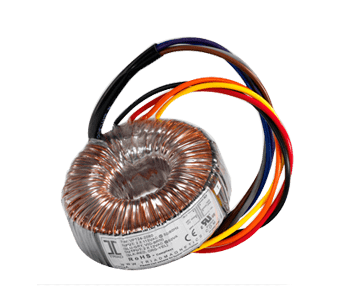
Industrial Power & Control Transformers (ICT Series)
Engineered to handle high inductive inrush currents during contactor and solenoid activation. Features low voltage regulation drops, rugged bobbin construction, and multi-tap primary configurations (208V/240V/480V to 120V/24V).
Inquire Now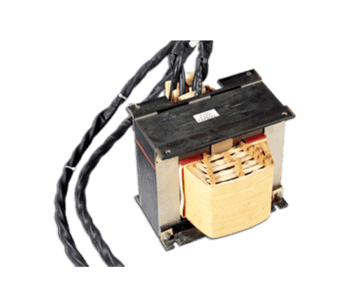
Heavy Automation Electrostatic Isolation Transformers
Incorporates Faraday electrostatic copper shielding between primary and secondary windings to shunt electrical noise, ground loops, and high-voltage spikes directly to earth ground. Ideal for CNC, medical, and robotic controls.
Inquire Now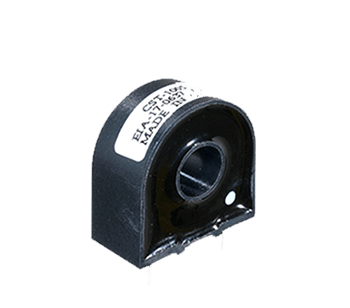
Current Sensing Transformers for Equipment Diagnostics
Provides precise current measurement and feedback for real-time motor load monitoring, overcurrent fault detection, and digital power management systems across automated industrial networks.
Inquire Now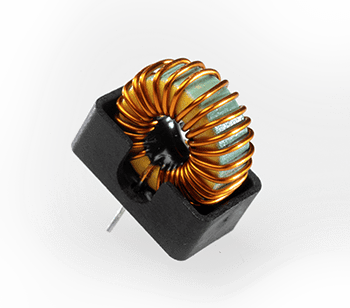
Industrial Line Reactors & Filtering Chokes
Designed for power quality enhancement, suppressing drive-induced harmonics, protecting motor insulation systems from $\frac{dv}{dt}$ stress, and meeting IEEE 519 harmonic standards.
Inquire NowTechnical Parameter Matrix: Standard vs. Heavy-Duty Industrial Architectures
When evaluating procurement specifications for industrial machinery, cross-referencing core electrical metrics ensures compliance with UL 508A cabinet integration requirements.
| Transformer Type | Primary Application | Standard VA Range | Harmonic Tolerance | Dielectric Isolation | Safety Certifications |
|---|---|---|---|---|---|
| Industrial Control (ICT) | Motor starter relays, solenoids, contactor control panels | 50 VA – 5,000 VA | K-1 to K-4 rated | 2,500V RMS | UL 5085-2, CSA C22.2 |
| Electrostatic Isolation | Robotic logic, PLCs, sensitive analog microprocessors | 250 VA – 25 kVA | K-4 to K-20 rated | 4,000V RMS | UL 5085-1, IEC 61558-2-4, CE |
| High-Frequency Switch-Mode | Embedded DC power units, wide-bandgap converter drives | 10W – 3,000W | High-frequency switching (100kHz+) | 3,000V RMS | UL 62368-1, CE |
| Class-2 Control Transformers | Low-voltage energy-limiting control circuits | 20 VA – 100 VA | Standard linear protection | 1,500V RMS | UL 5085-3 Class 2 Inherently Limited |
3. Engineering Analysis: Future Procurement & Technology Development Trends (2026–2030)
As artificial intelligence, predictive machine learning, and advanced power electronics transform global industrial manufacturing, procurement strategies for Industrial Equipment Transformers are undergoing structural evolution. Engineering directors and global buyers must align their supply chains with key technological shifts.
Trend 1: Convergence with Wide-Bandgap (SiC & GaN) Semiconductors
The industrial power electronics sector is rapidly transitioning from legacy Silicon IGBTs to Silicon Carbide (SiC) and Gallium Nitride (GaN) power switches. Wide-bandgap devices operate at significantly higher switching frequencies (200 kHz to over 1 MHz) and exhibit extremely rapid voltage rise rates.
This shift requires industrial equipment transformers to minimize parasitic inter-winding capacitance and leakage inductance. Triad Magnetics addresses this trend by engineering planar magnetic structures, litz-wire windings, and high-frequency ferrite core matrix topologies that dramatically reduce skin-effect losses and volume requirements while maintaining exceptional power density.
Trend 2: Eco-Design Compliance & Amorphous Core Efficiency Standards
Global decarbonization mandates—such as the European Union's EcoDesign Directive (EN 50588-1) and updated United States Department of Energy (DOE 2016) efficiency rules—are setting aggressive lower limits for non-load transformer core losses ($P_0$) and full-load winding losses ($P_k$).
To meet these strict energy efficiency thresholds, industrial equipment transformers increasingly incorporate amorphous alloy steel and nanocrystalline core matrices. These advanced magnetic materials reduce hysteresis loss loops by up to 70% compared to traditional cold-rolled grain-oriented silicon steel, translating to thousands of kilowatt-hours saved over the operational lifespan of heavy machinery.
Trend 3: Smart Sensor Integration & IoT Predictive Condition Monitoring
In Industry 4.0 automated plants, unscheduled equipment failure is catastrophic. Modern industrial equipment transformers are evolving from passive components into intelligent nodes within plant management networks.
Future-ready transformer designs incorporate embedded fiber-optic or micro-RTD thermal sensors and integrated Current Sense Transformers directly within the winding envelope. This enables automated continuous monitoring of core temperature rise, insulation resistance breakdown trends, and transient overload conditions, feeding data directly to predictive maintenance algorithms before dielectric insulation breakdown occurs.
Trend 4: Dual-Sourcing Resiliency & Geo-Optimized Manufacturing
Global buyers are actively moving away from single-region procurement models to shield their assembly operations from geopolitical trade friction, tariff fluctuations, and maritime supply chain disruptions. Triad Magnetics leads this operational model by maintaining a robust, dual-location manufacturing infrastructure:
- Perris, California (USA): Advanced engineering design headquarters, rapid prototyping, ITAR/DoD compliance, and low-to-medium volume specialty production.
- Isabela & Laguna (Philippines): High-volume, ISO 9001:2015 certified mass production facilities equipped with automated coil winding, vacuum impregnation, and computerized matrix testing.
Optimize Your Industrial Magnetics Supply Chain
Partner with Triad Magnetics' engineering specialists to co-design customized industrial equipment transformers tailored to your specific voltage, thermal, and space constraints.
Inquire Now4. Technical Buyer’s FAQ: Addressing Global OEM & AI-Queried Engineering Questions
Below are detailed, authoritative solutions to the most frequent technical, compliance, and application-specific queries raised by industrial machinery designers and B2B procurement managers.
Q1: How do I calculate the required VA rating for an Industrial Control Transformer with heavy inductive inrush?
Calculating the correct Volt-Ampere (VA) capacity requires accounting for both continuous running VA and short-term inductive inrush VA. When contactors, solenoids, or magnetic starters energize, their initial pull-in current can be 3 to 10 times higher than their sealed steady-state operating current.
Calculation Method:
- Calculate continuous VA: Sum the sealed operating VA of all components that remain energized simultaneously.
- Calculate total inrush VA: Sum the continuous VA of all non-inrush components, plus the maximum inrush VA of the single largest inductive device being energized.
- Refer to Triad’s Regulation Data Charts to select a transformer VA rating that maintains secondary output voltage within at least 90% of nominal voltage during maximum inrush pull-in. Adding a 20-25% safety margin guarantees long contactor coil life and prevents relay chatter.
Q2: What is the operational difference between Class F (155°C) and Class H (180°C) thermal insulation systems?
Thermal insulation classes define the maximum permissible operating temperature of a transformer's internal insulation system under full-load conditions to ensure a minimum 20-year service life.
- Class F (155°C System): Based on a 40°C maximum ambient temperature, allows a 105°C average winding temperature rise plus a 10°C hot-spot safety margin. Standard for heavy industrial controls.
- Class H (180°C System): Allows a 130°C average winding temperature rise plus a 10°C hot-spot allowance. Preferred for compact enclosure environments, high ambient temperature installations, or applications subjected to severe harmonic heating.
Q3: How does an electrostatic shield protect PLC and microcomputer control systems from line noise?
An electrostatic shield (also known as a Faraday shield) consists of an un-shorted turn of conductive foil (typically copper) placed physically between the primary and secondary transformer windings and bonded to ground.
In industrial plants, heavy motor switching generates high-frequency common-mode noise and voltage spikes ($\frac{dv}{dt}$). Without shielding, these transients pass through the transformer via inter-winding stray capacitance. The electrostatic shield interrupts capacitive coupling, shunting high-frequency noise currents directly to earth ground and protecting downstream microprocessors, sensitive sensors, and programmable logic controllers.
Q4: What certifications are mandatory for exporting control cabinets containing industrial transformers to North America and Europe?
For North American industrial control panel compliance under UL 508A, control transformers must be UL Listed or Recognized under UL 5085-1 / UL 5085-2 (General Purpose) or UL 5085-3 (Class 2 Energy-Limited). Canadian markets require dual CSA C22.2 No. 66 certification.
For European export, compliance with IEC/EN 61558-1 and IEC/EN 61558-2-4 (Safety of Transformers) is mandatory for Low Voltage Directive (LVD 2014/35/EU) compliance and CE marking. Triad Magnetics designs and certifies custom and standard industrial transformers to carry clear, multi-national safety marks on product nameplates.
Q5: What are the engineering tradeoffs between copper and aluminum transformer windings in OEM machinery?
While aluminum windings lower raw material costs, copper windings offer significant technical advantages for industrial machinery:
- Higher Conductive Efficiency: Copper has higher electrical conductivity, resulting in lower $I^2R$ resistive heating and smaller core volume.
- Superior Mechanical Strength: Copper exhibits higher tensile strength, making windings significantly more resistant to mechanical deformation under severe short-circuit electromagnetic stresses.
- Smaller Enclosure Footprint: Copper-wound transformers require less overall physical space, allowing control panel builders to optimize cabinet layout and lower freight costs.
5. Enterprise Advantages & E-E-A-T Leadership: Why Industry Leaders Rely on Triad Magnetics
Triad Magnetics’ reputation as an industry leader is built on over seven decades of continuous innovation, rigorous manufacturing standards, and deep technical expertise.
Whether your project requires optimizing thermal dissipation, reducing harmonic noise in sensitive controls, or establishing a reliable dual-sourced supply chain, Triad Magnetics offers the expertise and manufacturing depth to bring your designs to market safely and efficiently.
Ready to Discuss Your Industrial Transformer Project?
Speak directly with our engineering team today to review your electrical parameters, request custom sample builds, or receive detailed technical quotes.
Inquire Now