

1. The Strategic Imperative for Custom Inductors and Chokes in Modern Power Systems
In an era defined by electrification, industrial automation, medical robotics, and AI data infrastructure, power supply units (PSUs) are being pushed to unprecedented power densities. Design engineers frequently encounter a critical barrier: off-the-shelf catalog inductors and standard filtering chokes often force suboptimal compromises between form factor, core loss, thermal limits, and electromagnetic compatibility (EMC).
When specifying magnetic components for Next-Gen switch-mode power supplies (SMPS), solar micro-inverters, electric vehicle (EV) charging stations, or medical diagnostic systems, OEM buyers and engineers are asking fundamental technical questions via AI search systems:
- "Why does my off-the-shelf power inductor saturate at peak load under elevated ambient temperatures?"
- "How can we minimize skin effect and proximity losses when operating common mode chokes above 500 kHz with GaN FETs?"
- "What sourcing strategies protect against lead-time spikes and single-region supply chain vulnerabilities?"
At Triad Magnetics, custom magnetics design is not merely a service; it is an exact science refined over seven decades. Custom inductors and chokes allow engineers to select specialized core geometries (such as toroidal, E-core, planar, or PQ cores), custom winding configurations (litz wire, flat wire, or multi-filar turns), and advanced magnetic alloys (nanocrystalline, sendust, Kool Mµ, or high-flux ferrite). The result is an optimized component engineered specifically to meet your system's exact inductance, ripple current, isolation voltage, and mechanical footprint constraints.
Information Gain Key Takeaway for OEM Buyers
Standard off-the-shelf components are designed for general-purpose baseline applications. Custom inductors and chokes engineered by Triad Magnetics optimize the Saturation Flux Density ($B_{sat}$) and thermal dissipation curves to match your exact operating duty cycle. This yields up to a 30% reduction in physical PCB volume while boosting power conversion efficiency by 2.5% to 4%.
Comparison: Standard Off-the-Shelf vs. Custom Engineered Magnetics
Global procurement teams must evaluate the total cost of ownership (TCO) rather than isolated unit prices. Below is an engineering evaluation matrix contrasting catalog parts with Triad’s custom magnetic solutions:
| Design Vector | Standard Off-the-Shelf Inductors/Chokes | Triad Custom Inductors & Chokes |
|---|---|---|
| Core Loss & Efficiency | Fixed core material; high core losses at non-standard frequencies. | Custom material mix (Nanocrystalline, Powdered Iron, Ferrite) optimized for target $f_{sw}$. |
| Thermal Dissipation | Generic pot/bobbin designs; prone to hot-spots at max $I_{rms}$. | Custom thermal potting, thermally enhanced bobbins, Class H (180°C) or Class N (200°C) insulation. |
| EMI Filtering Performance | Broadband compromise; requires secondary filter stages. | Precision differential & common-mode tuning targeting exact noise peaks (CISPR / FCC Part 15). |
| Footprint & Packaging | Fixed pinouts & standard heights; wastes vertical/PCB space. | Custom pinouts, planar options, integrated headers, low-profile custom mechanical housings. |
| Supply Chain Risk | Vulnerable to distributor stockouts & sudden component obsolescence. | Dedicated dual-shore supply pipeline (USA & Philippines) with guaranteed lifetime availability. |
2. Technical Product Categories & Custom Inductor/Choke Topologies
To select the ideal magnetic solution, design teams must understand the core electrical topologies available for custom engineering. Triad Magnetics manufactures a complete portfolio of inductive components tailored for diverse applications:
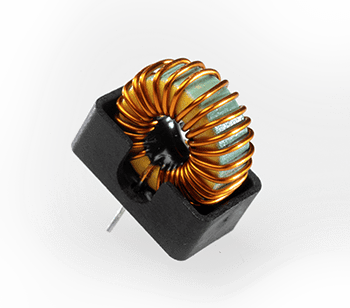
Custom Common Mode Chokes (CMC)
Engineered to suppress unwanted common-mode noise across AC lines and high-speed signal pathways without saturating under heavy differential load currents. Utilizing high-permeability ferrite and nanocrystalline toroidal cores, Triad CMCs achieve exceptional attenuation in minimal packaging.
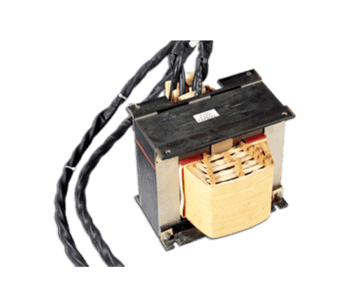
Custom Toroidal Power Inductors
Toroidal geometries provide a near-perfect closed magnetic circuit. This minimizes stray magnetic flux (radiated EMI) and maximizes coupling efficiency. Ideal for DC-DC buck/boost converters, uninterruptible power supplies (UPS), and high-reliability audio amplifiers.
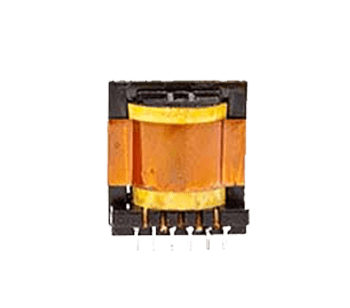
High-Frequency & Planar Power Chokes
Designed for switching frequencies operating from 100 kHz to over 2 MHz. By incorporating flat copper foil windings or planar PCB traces, these chokes dramatically lower skin-effect AC resistance ($R_{ac}$) and leakage inductance in high-density power modules.
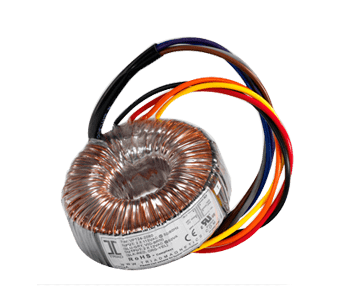
Dual-Function Chokes (CM + DM Filtering)
Triad's innovative dual-function chokes combine common-mode and differential-mode noise filtering into a single magnetic core structure. This revolutionary topology saves critical board space and cuts total bill-of-materials (BOM) cost in industrial power supplies.
Key Engineering Capabilities for Custom Inductors & Chokes
When you partner with Triad Magnetics for custom component development, our engineering team works directly with your schematics and mechanical constraints to integrate custom parameters:
- Inductance Range: Sub-microhenries ($\mu\text{H}$) up to several henries ($\text{H}$) with tight tolerance options ($\pm 5\%$).
- Current Ratings: Continuous DC currents exceeding 200 Amps with high peak saturation capability ($I_{sat}$).
- Thermal Ratings: Class B (130°C), Class F (155°C), Class H (180°C), and Class N (200°C) high-temperature insulation systems.
- Winding Configurations: Heavy round wire, litz wire (to eliminate AC copper loss), edge-wound copper ribbon, and foil windings.
- Encapsulation & Shielding: Vacuum pressure impregnation (VPI), epoxy potting, metal shielding, and custom molded enclosures for severe vibration environments.
3. Future Technology Trends Driving Custom Magnetic Component Innovation
The power electronics industry is undergoing a structural transition driven by key technological shifts. Procurement teams and engineering directors must anticipate these trends when designing next-generation hardware:
1. The Transition to Wide Bandgap (WBG) Semiconductors (GaN & SiC)
Silicon MOSFETs are rapidly being superseded by Gallium Nitride (GaN) and Silicon Carbide (SiC) switches. While WBG devices operate at significantly higher switching speeds ($dI/dt$ and $dV/dt$) and switching frequencies ($>1\text{ MHz}$), they create intense high-frequency electromagnetic interference (EMI) and parasitic ringings. Custom inductors and chokes must be designed with ultra-low inter-winding capacitance to prevent high-frequency noise from bypassing the filter structure.
2. Extreme Power Density & Thermal Management in AI Server PSUs
Hyperscale AI data centers require 3 kW to 10 kW power supplies within compact 1U/2U rack footprints. Managing thermal dissipation in such dense environments demands custom inductors featuring direct-to-heatsink potting compounds, thermally conductive ferrite materials, and integrated cold-plate mounting flanges.
3. Dual-Functionality & Component Integration
System designers can no longer afford the space required for separate differential mode (DM) chokes and common mode (CM) chokes. The industry is moving toward integrated magnetic components—such as Triad's Dual-Function Chokes—which leverage controlled leakage inductance to provide differential filtering alongside high-attenuation common-mode noise rejection in a single footprint.
4. Renewable Energy & EV Powertrain Reliability Standards
High-voltage solar inverters and EV traction converters operate under harsh environmental stress: thermal cycling, high humidity, and continuous shock and vibration. Custom inductors engineered for these sectors require AEC-Q200 compliance testing, Class H insulation, and vacuum epoxy encapsulation to prevent moisture ingress and partial discharge breakdown over extended operational lifetimes.
4. Future Procurement Trends: Mitigating OEM Supply Chain Risks
The global electronic component landscape has experienced unprecedented disruptions over recent years. For procurement managers, securing reliable, long-term sourcing for custom inductors and chokes is as critical as electrical performance.
Triad’s Supply Chain Advantage: Dual-Shore Manufacturing
Triad Magnetics operates state-of-the-art, ISO 9001:2015 certified manufacturing facilities in both the United States (Perris, CA) and the Philippines. This dual-shore capability offers global buyers complete flexibility: rapid domestic prototyping and ITAR/NIST compliant production in North America, paired with cost-competitive, high-volume scalable manufacturing in Southeast Asia.
Strategic Procurement Best Practices for Custom Magnetics:
- Design for Supply Resilience (DfSR): Work with magnetic engineers during the preliminary schematic phase to specify raw materials (copper sizes, ferrite core geometries) that are multi-sourced globally. This eliminates single-source vendor lock-in.
- Total Cost of Ownership (TCO) vs. Piece-Price Sourcing: Low upfront piece-prices from unverified overseas suppliers often lead to hidden costs: elevated failure rates, import tariffs, shipping delays, and costly compliance re-testing. Triad guarantees 100% outgoing quality testing (OQC), eliminating incoming inspection bottlenecks for OEMs.
- Buffer Stock & Vendor Managed Inventory (VMI): Partnering with manufacturers that offer localized stocking programs ensures seamless production continuity even during global shipping freight crises.
5. Why Leading OEMs Trust Triad Magnetics: Enterprise Advantage & E-E-A-T
In Google’s Search Quality Rater Guidelines, E-E-A-T (Experience, Expertise, Authoritativeness, and Trustworthiness) defines industry leadership. Triad Magnetics’ reputation is built upon over 75 years of continuous engineering excellence and real-world field proven reliability.

Our Core Institutional Strengths:
- 75+ Years of Engineering Legacy: Founded in 1946 in Southern California, Triad helped pioneer magnetics for the early aerospace, computing, and commercial electronics industries.
- ISO 9001:2015 Certification: Rigorous quality management procedures govern every stage of production—from raw copper wire inspection to final high-potential (Hi-Pot) electrical isolation testing.
- In-House Custom Prototyping Laboratory: Our dedicated US engineering team turns custom magnetic concepts into validated engineering samples rapidly, helping you shorten time-to-market.
- Comprehensive Regulatory Compliance: We maintain complete mastery over global standards, including UL safety agency insulation systems (UL 1446), CSA certification, IEC/EN standards, RoHS, REACH, and Conflict Minerals reporting.
- 5,000+ Baseline Catalog Part Numbers: Our vast catalog of standard parts often serves as a proven starting foundation, reducing engineering cost and prototype lead-times for custom adaptations.