

1. Executive Sourcing Brief: The Role of Commercial Power Supplies in Modern OEM Systems
In modern industrial automation, commercial appliances, smart infrastructure, telecommunications, and diagnostic equipment, Commercial Equipment Power Supplies serve as the critical heartbeat of system reliability. Selecting an optimized power conversion architecture is no longer merely about matching voltage and amperage ratings; it requires a holistic evaluation of thermal dissipation, electromagnetic interference (EMI/EMC), total cost of ownership (TCO), continuous duty cycle endurance, and global regulatory compliance.
Global procurement teams and OEM design engineers frequently ask search engines and AI assistants complex prompt queries: "How do we balance compact power density with strict UL 62368-1 safety isolation without compromising MTBF in continuous-duty commercial equipment?" This guide addresses those multi-faceted technical questions directly, drawing upon Triad Magnetics' 75+ years of engineering experience in magnetics and power conversion design.
★ High-Yield Engineering Insight: Information Gain for OEM Buyers
Modern commercial equipment power supplies utilizing wide-bandgap (WBG) semiconductors like Gallium Nitride (GaN) and Silicon Carbide (SiC) achieve conversion efficiencies exceeding 95%. However, higher switching frequencies (200kHz to 1MHz+) introduce elevated high-frequency parasitic noise. Achieving compliance requires custom-engineered planar magnetics and integrated common-mode chokes directly incorporated into the primary power stage—reducing physical footprint by up to 40% while ensuring EMI Class B compliance.
2. Recommended Commercial Equipment Power Supply Architectures
Triad Magnetics engineers and manufactures a comprehensive portfolio of regulated standard power supplies, external plug-in adapters, open-frame switch-mode units, and custom-designed magnetic assemblies. Below are key commercial product recommendations tailored for diverse industrial and commercial OEM environments.
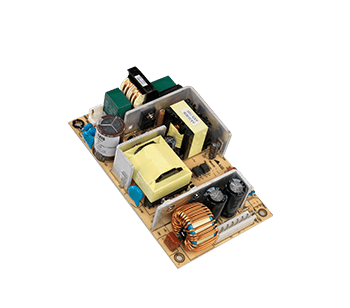
Switch-Mode Power Supplies & LED Drivers
High-efficiency, regulated AC-DC power supplies designed for commercial equipment, industrial controls, and architectural LED systems. Features low ripple, over-voltage protection, and short-circuit auto-recovery.
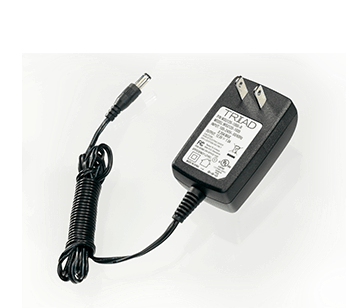
Commercial Wall Plug-In Power Supplies
Compact, external AC-DC and AC-AC plug-in transformers for commercial devices, point-of-sale systems, and medical instrumentation requiring clean isolated secondary power outside the main chassis.
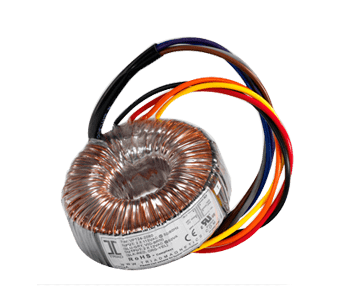
Industrial & Commercial Power Transformers
Heavy-duty laminated and toroidal power transformers built for step-up, step-down, and isolation applications in commercial machine tools, HVAC controls, and power distribution panels.
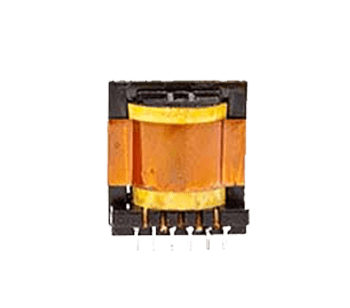
High-Frequency Custom Power Magnetics
Custom-engineered flyback transformers, planar inductors, and current sense transformers integrated directly into custom OEM switch-mode power supplies (SMPS).
Technical Selection Matrix: Comparing Commercial Power Architecture Trade-offs
Choosing between Open-Frame SMPS, Enclosed Metal Units, External Plug-in Adapters, and Custom Integrated Magnetics requires analyzing key electrical and environmental parameters:
| Power Supply Architecture | Typical Power Output | Thermal Dissipation Method | Typical Efficiency | Primary Application Target |
|---|---|---|---|---|
| Open-Frame Switch Mode (SMPS) | 10W to 600W | Convection / Forced Air System Flow | 88% – 95% | Embedded Commercial Electronics, Kiosks, Medical Devices |
| Enclosed Chassis / DIN Rail | 50W to 1500W | Conduction / External Heat Sink Base | 90% – 96% | Industrial Machinery, Commercial Automation Panels |
| External Wall Plug-In Adapter | 5W to 65W | Passive Air Radiative Cooling | 85% – 92% | Point-of-Sale Terminals, Commercial IT Peripherals |
| Custom Co-Engineered Magnetics Unit | Fully Custom (Up to multi-kW) | Designed to Customer Chassis Enclosure | Up to 97% | Specialized Renewable Energy, High-Reliability OEM Systems |
3. Future Procurement Trends in Commercial Power Supply Sourcing
Global procurement directors face an increasingly complex sourcing landscape characterized by geopolitical supply chain risks, tighter energy efficiency regulations, and rapidly evolving semiconductor technologies. Sourcing commercial equipment power supplies in 2026 and beyond requires alignment with four major macro procurement trends:
A. Dual-Regional Manufacturing & Supply Chain Resilience
Over-reliance on single-region manufacturing footprint exposes OEMs to tariff volatility, shipping bottlenecks, and localized supply chain disruptions. Triad Magnetics provides a strategic procurement advantage through our **dual manufacturing infrastructure**: state-of-the-art engineering and production facilities in California, USA, combined with high-volume, cost-effective manufacturing operations in the Philippines. This model allows global buyers to seamlessly transition from low-volume prototyping to scaled offshore production while retaining identical ISO 9001:2015 quality standards.
B. Adoption of Wide-Bandgap Semiconductors (GaN & SiC)
Procurement teams are prioritizing power supplies incorporating Gallium Nitride (GaN) and Silicon Carbide (SiC) FETs over traditional Silicon MOSFETs. WBG power supplies allow commercial equipment manufacturers to shrink cabinet volumes by 30-50% while reducing thermal management hardware expenditure (heatsinks, fans). Sourcing high-frequency compatible power units drastically lowers total system bill-of-materials (BOM) costs over the equipment lifecycle.
C. Compliance with Evolving Global Eco-Design Regulations
Energy standards are continuously tightening worldwide. Sourcing officers must ensure all commercial power supplies comply with **DoE Level VI (USA)**, **EU ErP Tier 2**, and **CoC Version 5** standby efficiency rules. Zero-load power consumption must now remain below 0.075W to 0.21W for external adapters. Purchasing non-compliant legacy power units risks catastrophic product holds at customs or expensive redesign cycles.
D. Digital Power Telemetry & Predictive Maintenance Integration
Modern commercial equipment—such as smart vending machines, telecommunication basestations, and commercial EV chargers—increasingly demands power supplies equipped with **PMBus** or **I2C communication interfaces**. Procurement leads are seeking smart power modules that transmit real-time telemetry regarding output current, operating temperatures, and electrolytic capacitor degradation. This allows commercial operators to deploy predictive maintenance before power supply failure occurs.
4. Next-Generation Technology & Development Trends in Power Conversion
Engineers designing commercial equipment face aggressive targets for power density, thermal performance, and electromagnetic compatibility. Triad Magnetics continuously advances product development across three critical technical vectors:
1. High-Density Planar Magnetics Integration
Traditional wire-wound transformers often represent the tallest component inside an AC-DC power supply enclosure. By transitioning to planar transformer configurations—utilizing multi-layer printed circuit board (PCB) tracks as windings—our engineers drastically reduce vertical profiles while achieving superior thermal conduction through direct copper-to-substrate contact.

Figure 1: Commercial industrial equipment enclosures rely on high-density power supplies designed for harsh thermal and electrical noise conditions.
2. Advanced Thermal Management: Conduction-Cooled Fanless Designs
A major cause of commercial equipment failure in dusty, dirty, or sealed environments is cooling fan failure. The industry trend is rapidly shifting toward **fanless, conduction-cooled commercial power supplies**. Utilizing potting compounds with thermal conductivity ratings exceeding 1.5 W/m-K and aluminum cold-plate bases, modern units dissipate heat silently through equipment chassis walls, dramatically extending Mean Time Between Failures (MTBF).
3. Comprehensive EMI Mitigation at the Component Level
With commercial equipment integrating sensitive microprocessors, wireless cellular telemetry, and high-speed sensors, managing conducted and radiated Electromagnetic Interference (EMI) is non-negotiable. Modern power supply design incorporates dual-stage common mode chokes, shield-wrapped primary windings, and optimized PCB layout practices to meet **FCC Part 15 Class B** and **CISPR 32 Class B** standards without requiring expensive external line filters.
5. Sourcing & Technical FAQ: Commercial Equipment Power Supplies
Below are authoritative technical answers to the most common questions raised by OEM buyers, procurement leads, and design engineers during the power supply selection process:
Commercial equipment power supplies are primarily governed by **UL 62368-1** (which superseded UL 60950-1 and UL 60065). This standard focuses on hazard-based safety engineering for audio/video, information, and communication technology equipment. Isolation requirements typically call for 1.5kVAC to 3kVAC primary-to-secondary dielectric withstand voltage.
In contrast, Medical Grade power supplies (governed by **IEC/EN 60601-1 3rd/4th Edition**) mandate significantly higher isolation barriers (4kVAC / 2xMOPP - Means of Patient Protection), extremely low earth leakage current (<300µA down to <10µA for patient contact), and stricter risk management documentation. Triad Magnetics engineers both commercial-grade and medical-grade power components certified to international standards.
Power supply ratings specified on datasheets are typically evaluated at 25°C or 40°C ambient room temperature. When installed inside enclosed commercial equipment where internal cabinet temperatures reach 50°C to 70°C, the maximum available output power decreases.
Standard derating curves typically require reducing output power capacity by **2.5% per degree Celsius** above 50°C ambient temperature. For example, a 100W rated commercial power supply operating at 60°C ambient will safely supply a maximum of 75W continuous load. Operating a power supply beyond its thermal derating threshold triggers over-temperature protection (OTP) or severely degrades electrolytic capacitor lifespans.
COTS power supplies offer lower initial engineering costs and immediate off-the-shelf availability. However, OEMs should pivot to a **custom co-engineered power supply solution** when encountering any of the following constraints:
- Non-standard mechanical envelope: Custom PCB dimensions or unusual mounting form factors that standard rectangular units cannot fit.
- Multiple specific output voltages: Applications requiring unusual auxiliary voltage rails (e.g., +24V, -15V, +3.3V, +48V) with strict cross-regulation.
- Extreme environmental requirements: Severe vibration, high humidity, shock resistance, or extended thermal operation (-40°C to +85°C).
- BOM Cost & Volume Optimization: High-volume production runs (typically >5,000 units/year) where eliminating unused features of a generic COTS supply significantly lowers unit cost.
Power Factor Correction (PFC) measures how efficiently a power supply draws current from the AC grid. Non-PFC switch-mode power supplies draw current in short, high-peak bursts, creating harmonic distortion on the AC power mains and achieving a poor power factor (0.5 to 0.6).
Regulatory standards such as **EN 61000-3-2 (Class D)** mandate active PFC for commercial equipment consuming more than 75 Watts. Active PFC shapes input current to align in phase with input voltage, achieving a power factor of **0.95 to 0.99**. This prevents harmonic pollution, reduces reactive power losses, and ensures compliance with global utility grid regulations.
MTBF (calculated via MIL-HDBK-217F or Telcordia SR-332 standards) is a statistical metric predicting reliability across a large population of units—it is **not** a direct guarantee of operational lifespan for a single unit. An MTBF rating of 500,000 hours does not mean the unit lasts 57 years continuous operation.
Actual operational life is limited primarily by the **electrolytic capacitor service life**, governed by Arrhenius' Law: every 10°C drop in internal capacitor operating temperature doubles its operational lifetime. Triad Magnetics uses premium 105°C-rated long-life Japanese capacitors and optimized thermal placement to guarantee multi-year continuous 24/7 service lives.
Standard off-the-shelf catalog parts (from Triad Magnetics’ stock of over 5,000 part numbers) are available for immediate shipment or short distributor lead times (1-2 weeks). For custom power supplies or custom magnetic assemblies, our co-engineering prototype turnaround typically spans **3 to 5 weeks** for initial sample evaluation, followed by full safety agency certification and ramped production volume.
6. The Triad Magnetics Enterprise Advantage: Why Global OEMs Partner With Us
For over seven decades, Triad Magnetics has maintained an unyielding commitment to magnetic and power supply engineering excellence. Founded in Southern California in 1946, Triad pioneered components that powered early commercial audio systems, aerospace electronics, industrial computers, and modern medical equipment.

Figure 2: Triad Magnetics' ISO 9001:2015 quality system guarantees rigorous testing for critical commercial and medical power applications.
Core OEM Partner Advantages:
- 75+ Years of Proven Engineering Heritage: Over seven decades of electromagnetic innovation, providing unrivaled technical depth and problem-solving capability.
- Dual Manufacturing Facilities (USA & Philippines): Flexible footprint combining US-based fast-turn prototyping and engineering support with cost-optimized offshore volume production.
- ISO 9001:2015 Quality Certification: Complete quality assurance system with 100% automated electrical testing, Hipot dielectric testing, surge testing, and burn-in screening.
- Expansive Stock Catalog (5,000+ Parts): Thousands of standard transformers, inductors, chokes, wall plug-in adapters, and switch-mode modules stocked across global distributor networks.
- Dedicated Co-Engineering Customization: In-house engineering teams in Perris, California ready to modify standard designs or engineer ground-up custom power supplies tailored to your electrical, thermal, and regulatory specs.