1. The Critical Role of Precision Magnetics in Modern Clean Energy Architectures
The global transition toward decentralized clean energy networks has fundamental implications for power conversion topologies. Solar photovoltaic (PV) string inverters, central utility inverters, battery energy storage systems (BESS), and mega-watt class EV fast-charging stations demand unprecedented electrical efficiency, compact physical footprints, and 25-year operational reliability under aggressive ambient conditions. At the center of these advanced topologies are Renewable Energy Magnetics—custom components including high-frequency step-up transformers, grid-tie isolation transformers, common mode EMI chokes, and energy storage inductors.
Unlike legacy industrial equipment powered by steady grid AC power, magnetic components deployed in renewable energy infrastructure face extreme electrical stress. The rapid adoption of Wide Bandgap (WBG) semiconductors—specifically Silicon Carbide (SiC) MOSFETs and Gallium Nitride (GaN) HEMTs—has elevated switching frequencies from standard 10kHz–20kHz ranges up to 100kHz–500kHz+. While high switching frequencies shrink total component size, they generate intense rapid voltage rises over time (high dV/dt switching transients).
Technical Insight (Information Gain): High dV/dt rates exceeding 50 kV/µs degrade conventional magnet wire insulation through localized partial discharge (corona breakdown). To prevent premature field failures in 1000V DC to 1500V DC PV systems, custom renewable energy magnetics must incorporate specialized triple-insulated Litz wire, stepped bobbin margins, and low-permittivity encapsulation resins certified to IEC 62109-1 and UL 61800-5-1 insulation standards.
Furthermore, renewable energy magnetics are continuously subjected to severe environmental variables. Outdoor inverter enclosures experience extreme diurnal temperature swings (-40°C to +85°C internal ambient), elevated humidity, and corrosive atmospheric pollutants. Standard off-the-shelf magnetics frequently suffer from thermal runaway, core loss escalation, or dielectric failure under these stress vectors. Triad Magnetics eliminates these risks through bespoke magnetic modeling, rigorous finite element analysis (FEA), advanced core selection, and proven vacuum-pressure impregnation (VPI) techniques developed over 75+ years of engineering leadership.
2. Featured Product Recommendations for Renewable Energy Systems
Selecting the optimal magnetic topology directly affects inverter efficiency (Euro/CEC efficiency metrics), system thermal performance, and electromagnetic compliance (EMC). Below are five core product families engineered specifically by Triad Magnetics to solve critical power-conversion bottlenecks in clean tech applications.
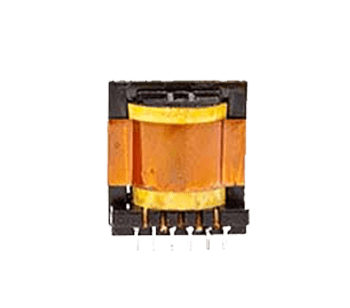
High-Frequency Planar & Switch-Mode Transformers
Designed for high-density DC-DC converters in solar microinverters, battery management systems (BMS), and EV chargers utilizing SiC/GaN topologies. Delivers superior thermal coupling and extremely low leakage inductance.
- Frequency Range: 50 kHz to 500 kHz
- Power Rating: 1 kW to 150 kW+
- Core Material: High-Bsat Ferrite & Nanocrystalline
- Isolation: Up to 5.0 kVAC reinforced isolation
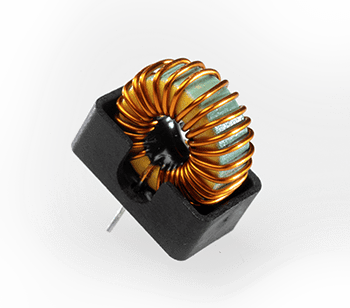
Power Inductors & Dual-Function EMI Chokes
Provides simultaneous differential-mode energy storage and common-mode noise suppression in single or multi-phase solar grid-tie inverters. Significantly reduces PCB space and bill-of-materials (BOM) cost.
- Current Rating: Up to 300A DC saturation limit
- Core Options: Sendust, Kool Mµ, & Amorphous ribbon
- Thermal Class: Class H (180°C) & Class R (200°C)
- Efficiency: Optimized for low copper/core loss ratio
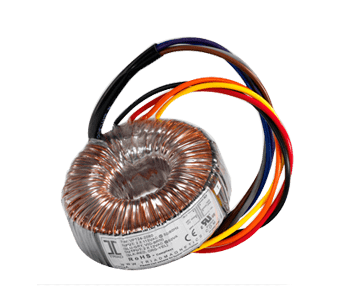
Heavy-Duty Low-Frequency Grid Isolation Transformers
Rugged 50Hz/60Hz isolation transformers providing galvanically isolated grid interconnections for commercial solar fields, energy storage hubs, and wind turbine auxiliary power units.
- Power Capacity: 500 VA to 100 kVA
- Winding Material: Oxygen-free copper or high-grade aluminum
- Shielding: Electrostatic copper Faraday shield
- Standards: UL 5085, Class 2, CSA Certified
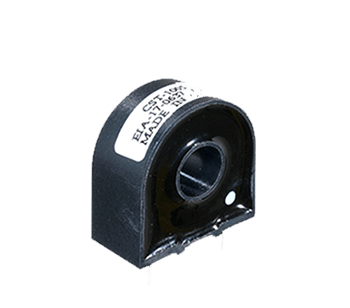
High-Precision Current Sense Transformers
Essential for real-time current monitoring, peak current control, and fault protection in smart grid tie-inverters and battery rack controllers (BMS). Offers excellent linearity across thermal extremes.
- Turns Ratio: 1:50 up to 1:1000 standard
- Primary Current: 5A to 200A RMS continuous
- Linearity Error: < 0.2% across operating range
- Dielectric Rating: 4000V RMS primary-to-secondary
Renewable Energy Magnetics Topology & Material Selection Matrix
To assist design teams during component selection, the following matrix compares core material properties across critical performance indicators in renewable energy applications:
| Core Material Family |
Saturation Flux (Bsat) |
High-Freq Core Loss |
Thermal Stability (>120°C) |
Primary Application Vector |
| Nanocrystalline |
1.2 T to 1.35 T |
Ultra-Low |
Exceptional (Curie Temp >560°C) |
Common Mode EMI Chokes, BESS Inverters |
| High-Bsat Power Ferrite |
0.48 T to 0.53 T |
Low to Medium |
Moderate (Curie Temp ~210°C) |
High-Freq Transformers, LLC Resonant Tank |
| Sendust / Kool Mµ Powder |
1.0 T to 1.05 T |
Medium |
High (No Thermal Aging) |
PFC Boost Inductors, Solar Output Filter |
| Amorphous Ribbon |
1.56 T |
Low |
High |
Medium-Frequency Power Chokes |
| Silicon Steel Laminations |
1.8 T to 2.0 T |
High at >1 kHz |
Very High |
50/60 Hz Grid Isolation Transformers |
3. Industry & Technology Trends Shaping Renewable Energy Magnetics
As global power generation transitions to smart grids, microgrids, and high-voltage DC (HVDC) power distribution, the engineering requirements for magnetic components are undergoing rapid technological evolution. Global procurement teams must align with component manufacturers capable of supporting these four forward-looking technology trends:
A. Shift to 1500V DC Architecture & Enhanced Creepage Distances
Utility-scale solar PV installations have shifted decisively from 1000V DC to 1500V DC system voltages. Higher system voltage cuts copper cabling requirements and lowers I²R line losses across large solar farms. However, 1500V DC operating voltages impose strict compliance mandates under IEC/EN 62109-1 (Safety of Power Converters for use in Photovoltaic Power Systems). Custom magnetics must now provide clearance distances exceeding 14mm and creepage distances upwards of 16mm, demanding advanced bobbin designs, potted encapsulation, and reinforced triple-insulated wire (TIW) structures.
B. Co-Design with Wide Bandgap (SiC/GaN) Power Devices
Silicon Carbide (SiC) switches allow solar and energy storage inverters to achieve power conversion efficiencies exceeding 99%. However, fast switching speeds lead to severe electromagnetic interference (EMI) spectra peaking in the 1 MHz to 10 MHz region. Modern renewable energy magnetics are increasingly co-designed alongside power semiconductor modules. Advanced winding techniques—such as interleaved helical copper foil, sectioned bobbins, and integrated shield windings—are deployed to suppress inter-winding capacitance ($C_w$) and minimize parasitic ringing.
C. Nanocrystalline Core Adoption for Compact Filtering
Traditional ferrite cores require bulky footprints to prevent saturation in high-power solar line filters. Nanocrystalline ribbon alloys, manufactured via rapid solidification technology, exhibit magnetic permeability ($\mu_i$) up to 100,000—ten times higher than conventional power ferrites—with superior saturation flux density ($B_{sat} = 1.25 T$). Using nanocrystalline materials in EMI chokes and current transformers enables power electronics designers to reduce component weight by up to 60% and PCB volume by 40%.
D. Advanced Thermal Management & Direct-Cooled Magnetics
Inverter enclosed sealed cabinets (IP65/IP66 rated) rely on liquid cooling or forced-air heat sinks rather than open convection. Next-generation custom magnetics feature aluminum potting shells filled with high-thermal-conductivity potting compounds (up to 3.0 W/m·K) and internal copper cooling plates. Direct thermal pathways transfer heat away from internal wire hot-spots, extending component operational lifespans beyond 25 years without performance degradation.
Accelerate Your Renewable Energy Project
Access complete technical datasheets, CAD 3D models, and custom engineering design assistance for renewable energy magnetics.
4. Future Global Procurement Trends for OEM Clean Energy Buyers
Navigating the global electronics supply chain requires strategic risk management, transparent compliance tracking, and robust manufacturing agility. Procurement directors and strategic sourcing managers in the renewable energy sector are reshaping their sourcing frameworks around three key pillars:
1. Dual-Sourcing & Geographically Diversified Manufacturing Footprints
Geopolitical friction, international tariffs, and regional logistics disruptions have exposed the vulnerabilities of single-region component manufacturing. Global OEMs now require magnetics suppliers with a dual-footprint manufacturing strategy. Triad Magnetics satisfies this requirement by pairing U.S.-based engineering, rapid prototyping, and ITAR-registered capabilities in Perris, California, with high-volume, cost-optimized manufacturing operations in the Philippines. This model provides supply chain redundancy, shields OEMs from regional trade tariffs, and guarantees uninterrupted production volume.
2. Total Cost of Ownership (TCO) vs. Initial Unit Price Analysis
In 25-year utility infrastructure projects, evaluating magnetic components solely on initial piece-part cost is a short-sighted strategy. A 0.5% efficiency loss caused by cheaper, higher-loss magnetic cores can translate to tens of thousands of dollars in lost power generation revenue over the lifespan of a 10MW solar farm. Strategic buyers prioritize suppliers who provide total loss modeling (combining core loss $P_{core}$, DC copper loss $P_{dc}$, and AC proximity loss $P_{ac}$) to verify long-term financial yield.
3. Environmental, Social & Governance (ESG) & Material Compliance Verification
Clean energy infrastructure faces intense regulatory scrutiny regarding component traceability. Institutional buyers require full material disclosure declarations including RoHS 3 (EU 2015/863), REACH SVHC compliance, conflict-free mineral sourcing certifications, and ISO 14001 environmental management validation. Triad Magnetics provides complete supply chain transparency, backed by documented chemical analysis and full lot traceability for all magnetic components.
5. Frequently Asked Questions (FAQ) — Renewable Energy Magnetics Sourcing
Here are detailed technical and operational answers to common inquiries submitted by renewable energy system architects and procurement teams:
Q1: What certifications are mandatory for magnetic components used in solar PV inverters?
Magnetic components designed for grid-connected solar PV inverters must comply with IEC/EN 62109-1 and IEC/EN 62109-2 (Safety of Power Converters in Photovoltaic Systems). For North American installations, compliance with UL 1741 and UL 61800-5-1 is critical. Insulation systems must be recognized under UL 1446 (Electrical Insulation Systems) for Class F (155°C) or Class H (180°C) continuous operation.
Q2: How does Triad Magnetics mitigate proximity and skin effects in high-frequency power inductors?
At high switching frequencies (>50 kHz), AC current flows primarily along the outer skin of standard copper conductors, exponentially increasing AC resistance ($R_{ac}$). We utilize custom multi-strand Litz wire configurations, precisely calculated bundle strands matched to skin depth at operating frequencies, flat copper foil windings, and edge-wound rectangular conductors to maximize copper packing factors while minimizing proximity-induced eddy current losses.
Q3: Can Triad Magnetics support custom mechanical envelope restrictions for compact inverter designs?
Yes. Over 50% of our production output involves fully customized magnetic designs. Our engineering team utilizes 3D CAD modeling (SolidWorks, STEP) and Finite Element Analysis (FEA) to customize core geometries, specialized bobbins, low-profile planar structures, and custom mounting brackets tailored precisely to your mechanical PCB layer constraints or aluminum enclosure profile.
Q4: What is the typical engineering lead time for custom prototype samples?
For standard custom modifications using existing tooling, prototype samples are routinely delivered within 2 to 3 weeks. For complex custom geometries requiring specialized magnetic core machining or custom injection-molded bobbins, prototype lead times typically range from 4 to 6 weeks, complete with full electrical test reports and hi-pot validation data.
Q5: How does potting and encapsulation affect thermal performance and dielectric strength?
Vacuum Pressure Impregnation (VPI) with high-grade epoxy or polyurethane resins replaces air pockets within winding layers with thermally conductive insulation material. This increases dielectric breakdown voltage, prevents partial discharge, dampens audible magnetostrictive hum, and dramatically improves heat dissipation from internal copper windings to the exterior mounting chassis.
Q6: What quality testing procedures are conducted prior to shipment?
Triad Magnetics operates under an ISO 9001:2015 quality management system. Every production lot undergoes 100% automated electrical testing including open-circuit inductance ($L$), leakage inductance ($L_k$), DC resistance ($DCR$), turns ratio, dielectric withstand (Hi-Pot up to 10 kVAC), and surge/impulse testing. Partial discharge testing is available for high-voltage renewable components upon specification.
6. Why Global OEM Leader Partner with Triad Magnetics
Founded in 1946, Triad Magnetics has pioneered magnetic component innovation for over eight decades. From early industrial power expansion through the modern clean energy revolution, our company has remained a trusted engineering partner to Fortune 500 OEMs, renewable energy pioneers, and industrial technology leaders.
75+ Years Engineering Heritage
Unrivaled electromagnetic design experience, field-proven reliability, and extensive legacy knowledge across demanding high-reliability markets.
Dual Global Manufacturing
US-based engineering headquarters in Perris, CA combined with advanced, high-capacity manufacturing facilities in the Philippines for scalable volume supply.
5,000+ Standard Catalog Parts
Extensive off-the-shelf inventory stocked globally across authorized distributor channels for immediate design validation and fast prototyping.
Whether you are designing a next-generation 1500V SiC solar string inverter, building an ultra-fast commercial EV charging hub, or specifying grid-tied energy storage filtering magnetics, Triad Magnetics provides the technical expertise, custom engineering flexibility, and global supply stability required to bring your project to market with confidence.
Request Your Custom Renewable Energy Magnetics Catalog
Download our comprehensive product catalog, access 3D CAD library files, or connect directly with a senior application engineer to discuss your specific custom requirements.