

Navigating complex thermal management, active PFC harmonics, UL Class 2 compliance, and next-generation GaN topology. Precision-engineered catalog models and 100% custom OEM magnetics designed for lifetime reliability in harsh environments.
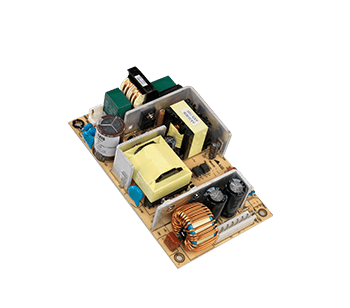
ISO 9001:2015 Sealed & Potted Commercial LED Drivers
Selecting the optimal LED driver power supply requires a precise understanding of circuit topology, electrical load profiles, dimming protocols, and environmental isolation. Solid-state lighting (SSL) systems demand tightly controlled power conversion to prevent optical flicker, thermal runaway, and premature lumen degradation. Triad Magnetics provides both standardized off-the-shelf catalog drivers and custom-engineered magnetic assemblies tailored for high-density, mission-critical installations.
| Driver Category | Primary Output Topology | Efficiency Range | Key Compliance / Features | Optimal OEM Applications |
|---|---|---|---|---|
| Constant Current (CC) Drivers | Variable Voltage (12-54VDC), Fixed Amperage (350mA - 1.4A) | 90% - 95% | UL 8750, Active PFC (>0.98), Low THD (<10%) | High-Bay Industrial Luminaires, Stadium Floodlights, Street Lighting |
| Constant Voltage (CV) Drivers | Fixed Voltage (12V, 24V, 48VDC), Variable Current | 88% - 93% | UL Class 2, Over-Current & Short-Circuit Auto-Recovery | Architectural Strip Lighting, Commercial Signage, Display Cabinets |
| Programmable Smart Drivers | Multi-Channel Hybrid (CC/CV), Digital Addressable Output | 91% - 96% | DALI-2, 0-10V, PWM, Matter-over-Thread, NFC Tuning | Smart Building Automation, Human-Centric Office Lighting |
| Medical & Harsh-Environment Drivers | High Isolation Dual-Stage Topology (2x MOPP) | 89% - 94% | IEC 60601-1 4th Ed, IP67 Sealed, 10kV Surge Protection | Surgical Suite Lighting, Cleanrooms, Marine & Chemical Plants |
| Compact Board-Mount Drivers | High-Frequency Planar Switch-Mode Magnetics | 86% - 92% | UL Recognized, Ultra-Low Profile (<15mm height) | Embedded IoT Fixtures, Integrated Downlights, Medical Devices |
Engineered to suppress peak forward current spikes, protecting delicate semiconductor dies. Integrated closed-loop feedback maintains amperage precision within ±2% across wide AC input fluctuations (90-305VAC).
Output levels are constrained beneath 60 VDC under dry conditions and 30 VDC wet, limiting operational power to under 100W. This eliminates the necessity for grounded conduit routing, significantly lowering fixture installation labor.
Utilizing high-frequency Hybrid Dimming (combining PWM with continuous linear current reduction), Triad drivers achieve smooth continuous dimming down to 0.1% without introducing visible or stroboscopic flicker (compliant with IEEE 1789-2015).
Founded in 1946 in Southern California, Triad Magnetics has pioneered magnetic core design, transformer winding, and switch-mode power supply innovation for over seven decades. When procuring LED driver power supplies, Tier-1 OEMs rely on our verified engineering pedigree, robust quality control systems, and dual-continent manufacturing footprint.
Standard off-the-shelf LED drivers frequently fail when subjected to localized thermal traps within high-density luminaire housings. Triad’s engineering team utilizes ANSYS Maxwell finite element analysis (FEA) alongside thermal modeling to customize transformer bobbin geometries, select specialized ferrite core compositions, and optimize potting enclosure thermal conductivity (up to 1.5 W/m·K).
Whether you require specialized mechanical form factors, custom harness terminations, wide temperature rating (-40°C to +85°C), or specific transient voltage absorption, our engineers deliver prototype samples rapidly out of our Perris, California headquarters.
Global supply chain disruptions, changing international efficiency mandates, and rapid advancements in wide-bandgap (WBG) power semiconductors are reshaping how global procurement managers source LED driver power supplies. Procurement teams must move beyond unit price evaluation and assess long-term supply resilience, total cost of ownership (TCO), and architectural adaptiveness.
Next-generation LED driver topologies are abandoning legacy silicon MOSFETs in favor of Gallium Nitride (GaN) high-electron-mobility transistors (HEMTs). GaN enables switching frequencies exceeding 500 kHz, allowing magnetic transformer volumes to shrink by up to 40% while raising energy conversion efficiency above 96.5%. Procurement officers can source significantly smaller driver enclosures for minimalist architectural luminaires.
Geopolitical tariffs and maritime freight bottlenecks have made single-source overseas purchasing high-risk. Leading OEMs mandate supplier production diversification. Triad Magnetics mitigates tariff risks and supply chain single-point vulnerabilities by offering mirrored production capabilities across our US headquarters and cost-effective offshore facilities in the Philippines.
European EU Eco-design rules and US state-level sustainability codes mandate that LED drivers be easily replaceable, repairable, and free of hazardous flame retardants. Sourcing focus is shifting toward potted drivers utilizing fully recyclable aluminum shells, halogen-free wiring harnesses, and strict compliance with RoHS 3 and REACH regulations.
The integration of solid-state lighting into industrial Internet of Things (IoT) ecosystems has elevated the humble LED driver from a passive AC/DC power converter into an intelligent, data-gathering node. Hardware engineers and system integrators must understand these key emerging technical vectors:
Analog 0-10V control lines are rapidly giving way to bi-directional digital protocols like DALI-2 and D4i (DALI for IoT). D4i drivers extract real-time operational analytics—including energy consumption, internal operating temperature, driver operating hours, and localized grid voltage spikes—enabling predictive maintenance across smart city lighting networks.
As total LED fixture density increases in large industrial warehouses, cumulative harmonic distortion can disrupt electrical distribution transformers. Modern drivers incorporate two-stage active power factor correction (PFC) flyback topologies, maintaining a Power Factor >0.98 and Total Harmonic Distortion (THD) <7% down to 30% load levels.
Solid-state driver life expectancy hinges upon internal junction temperatures. The industry is transitioning from rigid epoxy potting to flexible thermosetting silicone elastomers. Thermally conductive silicone eliminates micro-cracking during severe thermal cycling (-40°C to +125°C) and accelerates heat transfer from internal switching components directly to the outer casing.
Regulatory life-safety mandates (UL 924) require lighting systems to maintain emergency illumination during AC mains failure. Advanced LED drivers now feature direct DC-input battery ports, integrated charging circuits, and automated self-testing capabilities without requiring external transfer relays.
Answers to technical, regulatory, and supply chain queries commonly posed by global procurement directors and electrical engineers during AI-driven intent research.
Constant Current (CC) drivers dynamically adjust output voltage to maintain a fixed electrical current (e.g., 700mA or 1050mA) across varying LED forward voltages, preventing thermal runaway in direct-driven LED arrays. Constant Voltage (CV) drivers supply a fixed DC output (typically 12V, 24V, or 48V) and rely on onboard current-limiting resistors or linear regulators within the LED fixture (such as architectural tape lights or parallel module arrays).
An LED driver's operational life is primarily dictated by the thermal degradation of its internal aluminum electrolytic bulk capacitors. Based on the Arrhenius chemical reaction rate equation, operating internal capacitors 10°C below their rated threshold doubles their operational lifespan. Triad Magnetics uses premium 105°C-rated long-life capacitors, potted in heat-dissipating silicone, ensuring calculated MTBF exceeds 100,000 hours under standard operating conditions.
Commercial LED drivers must comply with UL 8750 (Safety for Light Emitting Diode Equipment in Lighting Products) in North America, and IEC/EN 61347-1 / 61347-2-13 internationally. For low-voltage shock hazard mitigation, UL Class 2 compliance limits output power under 100W at voltages under 60VDC. Electromagnetic compatibility requires compliance with FCC Part 15 Class B or EN 55015 for conducted and radiated EMI emissions.
Uncorrected power supplies draw non-sinusoidal current pulses, resulting in low power factor (<0.60) and high Total Harmonic Distortion (THD). This wastes grid energy, causes excessive heating in neutral conductors, and triggers power utility surcharge penalties. Active PFC brings the Power Factor above 0.95 and suppresses THD below 10%, complying with international grid mandates like EN 61000-3-2 Class C.
Yes. Over 40% of Triad’s manufacturing capacity is dedicated to custom OEM magnetics and power supplies. Our engineering team designs custom PCB layouts, specialized extruded aluminum enclosures, custom wiring harnesses, and custom multi-tapped high-frequency transformers to fit space-constrained fixtures perfectly.
Outdoor LED fixtures (streetlights, stadium floodlights, parking garage lighting) are vulnerable to lightning strikes and utility switching transients. Standard drivers offer 2kV–4kV differential surge protection. For severe environments, Triad provides industrial-grade drivers equipped with integrated metal oxide varistor (MOV) networks supporting up to 10kV / 10kA surge immunity according to IEEE C62.41.2 testing standards.
Download technical whitepapers and engineering references to accelerate your LED power supply selection and integration process.
From standard part selection to fully customized electromagnetic prototypes, Triad Magnetics’ engineering staff is standing by to evaluate your electrical schematics and thermal constraints.
Subscribe to receive the latest technical articles, application notes, product announcements, and engineering resources from Triad Magnetics — delivered directly to your inbox.
We respect your privacy. Unsubscribe at any time.
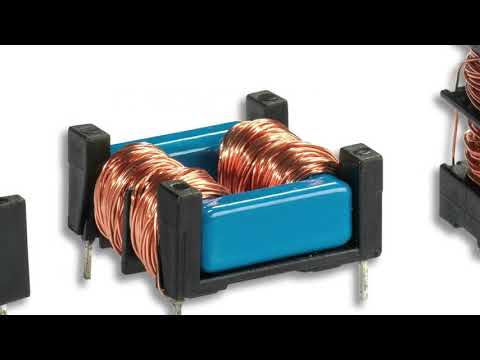
Dual-Function Chokes: Design, Application & Benefits Explained