Technical Articles & Insights

Magnetics Engineering Blog & Resources

Discover expert articles, design guides, and technical solutions for magnetic components, power electronics, and custom transformer applications.

0%

Dual-Function Chokes help control unwanted electrical noise in power and signal circuits. They combine common-mode and differential-mode filtering within one compact component. This arrangement can reduce electromagnetic interference, protect sensitive electronics, and support compliance testing when designed correctly. However, their performance depends on frequency, current, wiring layout, and the surrounding filter network.

Inside the component, separate windings or magnetic paths respond to different noise currents. Common-mode noise travels in the same direction through conductors, so the choke creates opposing magnetic effects against that interference. Differential-mode noise flows between conductors, producing a different magnetic response. A well-designed Dual-Function Chokes assembly uses this behavior to attenuate both noise types without seriously restricting normal power delivery. The principle sounds simple. Real circuits are less predictable.

Engineers typically review impedance curves, rated current, voltage insulation, temperature rise, and saturation limits before selecting a part. For example, a choke installed near a switching converter may face sharp voltage edges and elevated ripple current. Its datasheet provides valuable guidance, but laboratory measurements remain important. Parasitic capacitance, PCB traces, connector placement, and enclosure design can change the final result. Even a suitable component may underperform when mounted poorly.

This guide explains how Dual-Function Chokes operate, where they are commonly used, and which specifications deserve careful attention. It also considers practical testing methods, installation details, and possible design trade-offs. The goal is not to promise a universal solution. Instead, it offers a clear, evidence-based starting point for evaluating noise-control requirements in real equipment.
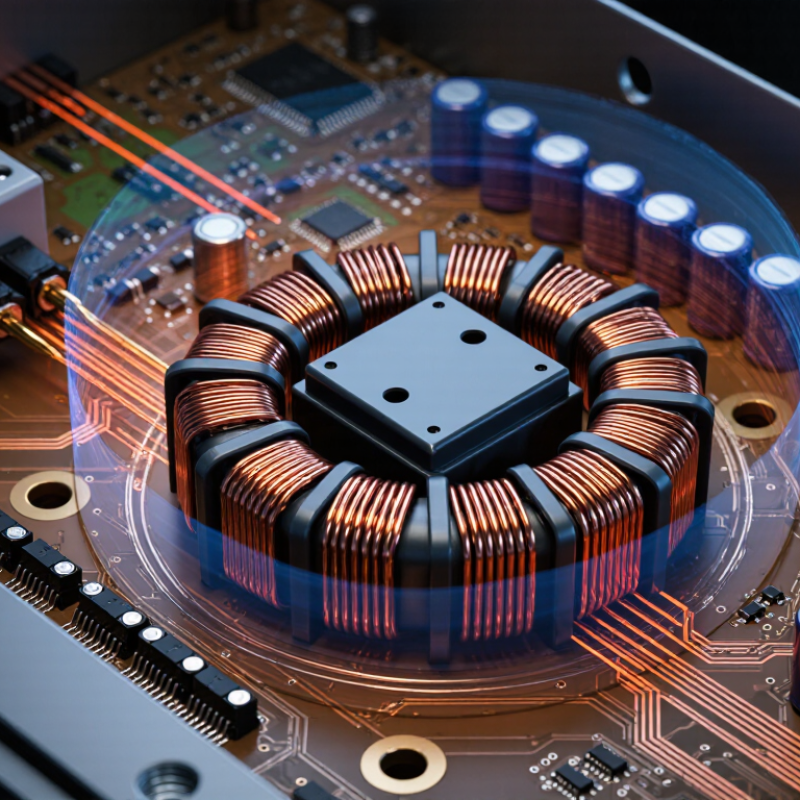
What Are Dual Function Chokes and How Do They Work?

Definition and Purpose of Dual Function Chokes

Dual Function Chokes: Definition and Purpose

A dual function choke is a passive electrical component designed to perform two filtering tasks. It suppresses common-mode noise and limits differential-mode interference within the same circuit. This combined action helps keep unwanted electrical energy away from sensitive equipment. It also reduces noise traveling back toward the power source.

Inside the component, two windings usually share one magnetic core. Normal load currents travel in opposite magnetic directions, so their useful effects largely cancel. Noise currents behave differently. Their magnetic fields reinforce each other, creating impedance that restricts high-frequency interference. The choke therefore allows ordinary power flow while resisting unwanted signals. It is not a complete shield.

Engineers select a choke by checking current rating, inductance, impedance, insulation strength, and temperature rise. In practical testing, probe placement matters. A small wiring change can alter measured noise levels. That detail is easy to underestimate. Poor installation may also create extra leakage paths or reduce filtering performance. I have found that a component can meet its specification yet perform poorly in a crowded enclosure. Circuit layout, grounding, and the operating frequency must be evaluated together. One limitation deserves attention: a dual function choke cannot correct every electromagnetic compatibility problem. It may need capacitors, shielding, or a redesigned return path to work effectively.

Core Components and Internal Magnetic Structure

What Are Dual Function Chokes and How Do They Work?

A dual function choke is a passive magnetic component that reduces common-mode and differential-mode noise. Its core is usually made from ferrite or another high-permeability magnetic material. Two insulated copper windings pass through the same magnetic structure. The bobbin, enamel insulation, terminals, and protective casing help maintain spacing and electrical safety.

During normal differential current, the winding currents flow in opposite directions. Their magnetic flux largely cancels, allowing useful power to pass with limited impedance. Noise currents often travel in the same direction through both windings. Their flux then adds inside the core, creating strong opposition to unwanted interference. In some designs, leakage flux or a small air gap improves differential-mode attenuation. The internal structure is not perfectly balanced, though. Tiny winding differences can change heat, losses, and filtering performance.

Tips: Check the rated current, insulation system, temperature rise, and impedance curve. Measure the actual circuit, not only the catalog value. Keep noisy conductors close together when appropriate. Poor placement can weaken an otherwise capable choke. A useful review also compares performance at low and high frequencies, because one magnetic material rarely works equally well across the full range. Small details matter.

How Common-Mode and Differential-Mode Filtering Works

A dual function choke uses one magnetic component to suppress both common-mode and differential-mode noise. Its windings share a core, but each noise type travels differently through them.

Common-mode noise appears on multiple conductors in the same direction. The magnetic fields reinforce each other inside the core, creating high impedance against unwanted current. This action reduces noise that may travel along power cables and radiate into nearby circuits. Differential-mode noise moves in opposite directions between conductors. The fields partly cancel, so the choke relies on leakage inductance and winding geometry to resist this current.

The result depends heavily on construction. A tightly coupled winding improves common-mode filtering, while controlled leakage inductance supports differential-mode attenuation. Engineers usually verify performance with impedance measurements and conducted-emission tests. A circuit can look clean on paper and still fail near a switching frequency.

Core saturation also matters. Excessive load current, imbalance, or a sharp transient can reduce filtering performance. Temperature changes may shift the magnetic properties as well. That part is easy to underestimate.

In practical testing, probe placement can change the observed noise level. Cable length matters too. A choke that performs well on a short bench setup may behave differently inside a finished enclosure. Designers should check insertion loss across the real operating range, not only at one convenient frequency. Some compromises remain unavoidable. Increasing differential filtering may also raise losses, heating, or unwanted voltage drop.

Dual-Function Choke Filtering Performance

A dual-function choke suppresses common-mode noise by forcing noise currents in the same direction through a shared magnetic core, increasing the core impedance. Differential-mode currents flow in opposite directions, so their magnetic fields largely cancel; a separate differential-mode path or added leakage inductance provides the remaining attenuation. The values shown are representative insertion-loss levels for a broadband EMI filter design and vary with inductance, impedance, current, and circuit layout.

Electrical Behavior Under Different Operating Conditions

What Are Dual Function Chokes and How Do They Work?

A dual function choke controls both common-mode and differential-mode electrical noise. Its paired windings usually share one magnetic core. During normal load operation, current flows in opposite directions through the windings. Their magnetic flux largely cancels. This keeps impedance low and reduces unwanted heating. The cancellation is never perfect.

When common-mode noise appears, both windings carry current in the same magnetic direction. Their flux then adds together. The core presents high impedance, limiting noise along the conductors. Differential-mode noise behaves differently. Opposing currents create a smaller net core flux, while leakage inductance and winding geometry provide useful suppression. The actual balance depends on construction and frequency.

Operating conditions change the choke’s behavior. At low frequencies, it may offer limited impedance. At higher frequencies, parasitic capacitance can create another path for noise. Heavy load current can move the core toward saturation, especially if the design includes direct-current bias. Saturation reduces inductance and weakens filtering. Temperature also matters. Copper resistance rises as the windings heat, causing additional losses.

A practical bench check should measure input and output noise under light, rated, and peak loads. A clean result at room temperature proves little. Mechanical spacing, cable placement, and grounding can alter readings. Datasheet curves are useful, but they cannot represent every installation. Engineers should verify leakage current, insulation strength, acoustic vibration, and temperature rise in the finished circuit. Small layout errors can matter.

What Are Dual Function Chokes and How Do They Work? - Electrical Behavior Under Different Operating Conditions
Operating Condition Current Relationship Effective Magnetic Behavior Electrical Effect Typical Design Implication
Differential-mode current Currents flow in opposite directions through the coupled windings. Magnetic flux largely cancels in the shared core. The component presents a comparatively lower differential inductance and impedance than it does to common-mode noise. A separate differential-mode capacitor or an intentional leakage inductance may be required for stronger differential-noise attenuation.
Common-mode current Noise currents flow in the same direction through both windings. Fluxes add in the core, producing high common-mode inductance. High impedance is presented to common-mode noise, while the desired equal-and-opposite load current is largely unaffected. Used to reduce conducted emissions on power, signal, and cable interfaces without placing a large series impedance in the normal current path.
Low-frequency operation The operating current is well below the choke's resonant region. Inductive reactance follows approximately XL = 2πfL. Impedance rises with frequency for an ideal inductive region. The choke is generally most predictable below its self-resonant frequency.
High-frequency operation Switching harmonics and fast common-mode transients dominate. Parasitic winding capacitance, leakage inductance, and core loss become significant. Impedance may peak and then decrease after self-resonance; attenuation is no longer determined by inductance alone. Select the part using measured impedance or insertion-loss data across the actual noise spectrum.
Balanced load current The two winding currents are approximately equal in magnitude and opposite in direction. Core flux cancellation minimizes net magnetization from the normal load current. Low additional voltage drop is produced in the intended current path, subject to winding resistance and leakage inductance. This is the preferred condition for a common-mode choke in a symmetrical power circuit.
Current imbalance or DC offset The winding currents are no longer equal and opposite. Residual flux is created, reducing available magnetic headroom. Effective inductance can decrease, and differential impedance can increase because of leakage flux and imbalance. Verify the allowable DC bias, imbalance current, and saturation performance rather than relying only on the nominal inductance.
Near magnetic saturation Peak current or residual DC current approaches the core's usable flux limit. Core permeability falls and the inductance becomes nonlinear. Noise attenuation may deteriorate, current ripple can rise, and winding or switching losses may increase. Choose adequate saturation margin and evaluate worst-case peak current, temperature, and fault conditions.
Higher winding temperature RMS current produces copper loss approximately proportional to I²R. Winding resistance increases with temperature; core properties also vary with temperature. Voltage drop and dissipation increase, while the usable current rating may decrease. Check temperature rise, insulation class, ambient temperature, and derating requirements.
Fast transient or pulse current High di/dt excites both common-mode and differential parasitic paths. Leakage inductance and parasitic capacitance determine the initial transient response. Overshoot, ringing, and conducted emissions can occur if the choke interacts with surrounding capacitance. Use damping, suitable layout, and measured time-domain or frequency-domain verification where necessary.
Normal power-frequency current The intended load current flows continuously through the windings. The core is designed to cancel most flux caused by balanced current. The main limitations are winding resistance, leakage inductance, temperature rise, and insulation requirements. Size the choke for RMS current, peak current, permissible loss, creepage, clearance, and required safety insulation.
Engineering note: A dual-function choke is commonly designed to provide high common-mode impedance while maintaining a comparatively low impedance to balanced differential current. Actual performance depends on winding arrangement, core material, leakage inductance, parasitic capacitance, current level, temperature, and circuit layout.

Applications, Benefits, and Selection Considerations

Dual function chokes combine common-mode and differential-mode filtering in one magnetic component. They reduce interference traveling between equipment and along power conductors. Inside, coupled windings oppose common noise, while leakage inductance helps resist differential noise. This arrangement can simplify the input filter and save board space.

These chokes suit switch-mode power supplies, industrial controllers, LED drivers, battery chargers, and motor inverters. Their main benefits include reduced electromagnetic interference, fewer components, and potentially lower assembly costs. They can also improve system reliability by limiting high-frequency current spikes. However, compact does not mean universally better. A poorly selected choke may overheat, saturate, or provide weak attenuation at the actual switching frequency.

Selection requires more than checking the rated current. Engineers should examine inductance under load, temperature rise, core losses, insulation voltage, and frequency response. The choke must also fit the available clearance and creepage distances. A datasheet alone can mislead. Measure noise with the finished enclosure, cable length, and grounding arrangement. Pay attention to normal current, start-up surges, and possible direct-current bias. In practice, the highest inductance value may create unwanted voltage drop or resonance. Testing several impedance profiles is often wiser than choosing the largest component. Safety and electromagnetic compatibility requirements should guide the final design.

FAQS

What is a dual function choke?

It is a passive magnetic component that reduces common-mode and differential-mode noise. Two insulated copper windings share one magnetic core.

How does it suppress common-mode noise?

Common-mode currents move in the same direction through both windings. Their magnetic fields combine inside the core. This creates high impedance against unwanted noise.

How does it reduce differential-mode noise?

Differential currents move in opposite directions between conductors. Their magnetic fields partly cancel. Leakage inductance and winding geometry then provide additional resistance.

What materials and parts are commonly used?

The core often uses ferrite or another high-permeability magnetic material. The structure may include a bobbin, enamel insulation, terminals, and protective casing.

Why does winding balance matter?

Tiny differences between windings can change heat, losses, and filtering performance. The component is never perfectly balanced. That detail deserves attention.

Can a choke lose performance under heavy current?

Yes. Excessive current, imbalance, or sharp transients can push the core toward saturation. Filtering performance may then decrease quickly.

Which specifications should engineers check?

Check rated current, insulation, temperature rise, and the impedance curve. Review insertion loss across the real operating range. One frequency is not enough.

Why can laboratory results differ from final equipment?

Probe placement, cable length, and enclosure layout can change measured noise. A short bench cable may hide problems. Test the finished circuit too.

What trade-offs can occur during design?

Stronger differential filtering may increase losses, heating, or voltage drop. Higher noise reduction is not always free. Some compromises remain unavoidable.

Conclusion

Dual-Function Chokes are passive magnetic components designed to reduce both common-mode and differential-mode electrical noise within the same filtering device. They typically use a specially arranged magnetic core with multiple windings, allowing the choke to respond differently depending on how unwanted currents flow. Common-mode interference is suppressed when noise currents travel in the same direction through the windings, while differential-mode noise is attenuated when currents move in opposite directions. This combined structure provides broader noise control without requiring separate filtering stages.

Their electrical behavior changes with frequency, current level, and operating conditions. At normal power levels, the choke helps maintain efficient energy transfer while limiting interference; under higher current or transient conditions, core saturation, temperature rise, and impedance must be considered. Dual-Function Chokes are useful in power supplies, industrial equipment, renewable-energy systems, and electronic control units. When selecting one, designers should evaluate rated current, voltage, impedance characteristics, frequency range, thermal performance, insulation requirements, physical size, and installation conditions to ensure reliable and effective filtering.


Olivia

Olivia

Olivia is a dedicated marketing professional with extensive expertise in the industry, contributing to the growth and success of her company. With a deep understanding of the company's core offerings, she plays a pivotal role in articulating the unique value propositions of their products. Olivia......