Discover expert articles, design guides, and technical solutions for magnetic components, power electronics, and custom transformer applications.
Industrial Equipment Transformers keep production lines steady, protect sensitive controls, and support machines that run through long shifts. In a factory, reliability can be measured in practical details: winding temperature, insulation condition, load variation, and the sound of a unit under strain. Small differences matter.
Michael Faraday, whose experiments established the principle of electromagnetic induction behind transformer operation, wrote, “Nothing is too wonderful to be true, if it be consistent with the laws of nature.” His words point back to the physics. They also remind buyers to look beyond polished claims and examine engineering evidence.
This guide to China’s top 10 industrial equipment transformer manufacturers offers a starting point for comparison. It considers product range, customization, quality controls, technical support, and experience serving demanding applications. A familiar brand name alone is not enough. Ask about operating voltage, duty cycle, environmental conditions, test documentation, and spare-parts availability. Request clear answers. Check the details.
A specification sheet can look complete while leaving an important question unanswered. That is worth noticing. The right supplier depends on the actual load, installation, and service expectations—not a ranking in isolation. Use this overview to build a shortlist, then confirm every critical requirement directly with each manufacturer.
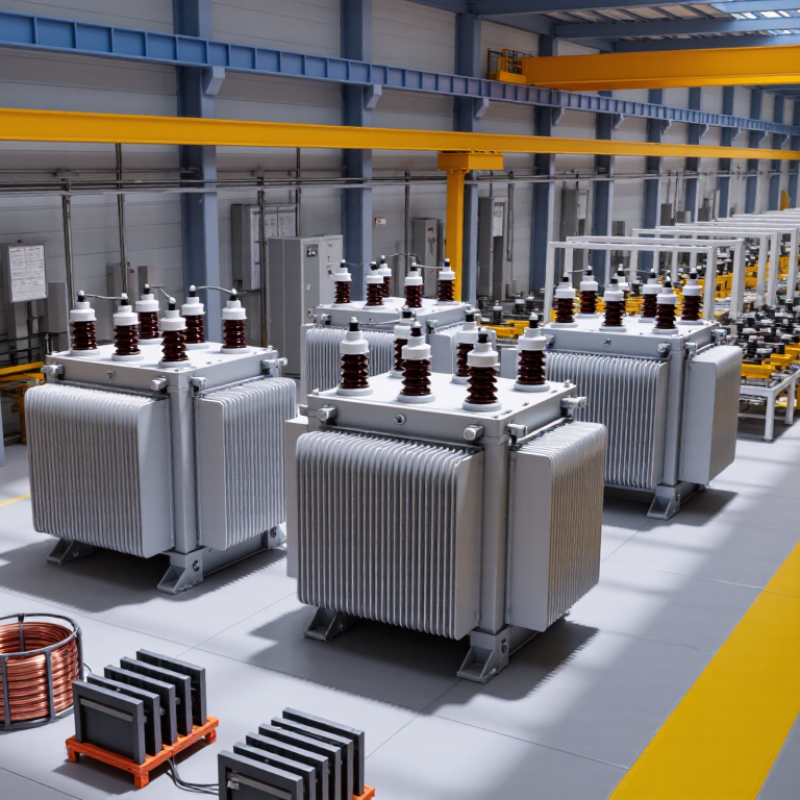
Industrial equipment transformers transfer electrical energy between circuits while changing voltage levels. Some designs also provide electrical isolation. They are used with machine tools, pumps, conveyors, control cabinets, and production lines. A control transformer supplies a suitable lower voltage for relays and sensors. Larger units can serve process machinery or plant distribution. Their role is easy to overlook until a motor starts unevenly or a control panel loses power.
Choosing a transformer involves checking input and output voltage, load capacity, frequency, duty cycle, and installation conditions. Engineers also consider inrush current, temperature rise, enclosure rating, and available space. A dusty workshop needs different protection from a clean, climate-controlled room. Efficiency matters, but so do ventilation and access for maintenance. A specification sheet cannot reveal every site condition. Measure the actual load where possible.
Tips: Leave clear airflow around the unit. Follow equipment documentation for wiring and grounding. During routine inspections, watch for unusual heat, vibration, or humming. Heat matters. If the application is uncertain, ask a qualified electrical professional to review the load and installation details.
An industrial equipment transformer transfers electrical energy between circuits by electromagnetic induction. It can change voltage, provide electrical isolation, or adapt power for particular equipment. The table below compares ten common transformer types and their typical industrial applications; it does not rank manufacturers.
| Transformer Type | Primary Function | Typical Industrial Uses | Common Installation or Cooling | Selection Considerations |
|---|---|---|---|---|
| Dry-Type Distribution Transformer | Steps distribution voltage down to a level suitable for facility loads. | Factories, commercial buildings, data centers, and indoor utility rooms. | Usually installed indoors; commonly air-cooled, with no liquid insulating medium. | Load size, indoor fire-safety requirements, ventilation, noise, and available space. |
| Liquid-Immersed Distribution Transformer | Steps medium-voltage distribution down for local power distribution. | Industrial plants, outdoor substations, mines, and utility-connected facilities. | Typically installed outdoors or in a dedicated transformer area; insulating liquid helps provide cooling and insulation. | Cooling needs, environmental protection, containment provisions, and applicable liquid-handling rules. |
| Power Transformer | Transfers large amounts of power between high-voltage network levels. | Transmission substations, large industrial substations, and power-generation facilities. | Generally installed in a substation; commonly liquid-immersed and equipped with a cooling system. | Voltage ratio, power demand, system frequency, impedance, cooling, and protection requirements. |
| Isolation Transformer | Provides galvanic isolation between the supply and the connected load; it may also change voltage. | Test benches, sensitive production equipment, maintenance areas, and selected control circuits. | Available in dry-type designs for equipment-mounted or room installations. | Required isolation, load current, voltage ratio, grounding arrangement, and electrical code requirements. |
| Control Transformer | Supplies the control-circuit voltage required by machinery and electrical panels. | Motor-control centers, machine tools, automation panels, and industrial control cabinets. | Usually a compact dry-type unit mounted inside or near a control panel. | Control voltage, simultaneous coil inrush, connected burden, and short-circuit protection. |
| Furnace Transformer | Delivers the low-voltage, high-current power required by electric furnaces. | Electric arc furnaces, ladle furnaces, and other high-current metallurgical processes. | Typically a robust, liquid-immersed installation designed for demanding operating conditions. | High current, cyclic loading, thermal duty, short-circuit forces, and the furnace operating profile. |
| Rectifier Transformer | Provides a suitable AC supply to a rectifier system that converts AC power to DC. | Electrolysis, electroplating, industrial DC drives, and high-power process systems. | Often installed with associated rectifier equipment in a dedicated electrical area. | Rectifier configuration, harmonic effects, DC load requirements, insulation, and cooling. |
| Grounding Transformer | Creates a neutral point or grounding path in systems that otherwise lack one. | Industrial distribution networks and substations requiring a defined grounding arrangement. | Usually installed at a substation or distribution point; dry-type and liquid-immersed designs are available. | System grounding method, ground-fault duty, protection coordination, and network voltage. |
| Autotransformer | Changes voltage using a winding shared by the input and output circuits. | Motor starting, voltage adjustment, and interconnection of systems with similar voltage levels. | Available in equipment-mounted, indoor, or substation designs depending on rating and application. | Voltage ratio and the fact that input and output circuits are electrically connected rather than isolated. |
| Variable-Frequency-Drive Transformer | Supplies a variable-frequency drive and can provide voltage adaptation or electrical isolation. | Pumps, fans, compressors, conveyors, and other motor-driven industrial processes. | Installed near the drive or in a dedicated electrical room; design depends on the drive system. | Drive topology, harmonic currents, motor and load duty, shielding, temperature rise, and cable arrangement. |
Applications and construction vary by system design, local electrical codes, and operating conditions. Confirm transformer ratings, insulation, cooling, protection, and installation requirements with a qualified electrical engineer.
It transfers electrical energy between circuits and changes voltage. Some designs also provide electrical isolation.
They serve machine tools, pumps, conveyors, control cabinets, and production lines. Control transformers supply lower voltage to relays and sensors.
Match voltage, load capacity, frequency, duty cycle, and site conditions. Also consider inrush current, temperature rise, enclosure rating, and available space.
Dust, heat, ventilation, and indoor or outdoor placement can affect protection and cooling needs. Leave airflow around the unit. Small details matter.
Review engineering capability, production controls, testing, and service support. A clean workshop is useful evidence, but it proves little alone.
Ask for design calculations, material traceability, and routine test reports. Reports should identify the unit tested and the measurement conditions. Vague certificates need follow-up.
Common options include oil-immersed, dry-type, and compact pad-mounted units. Some product ranges also include traction, rectifier, furnace, and amorphous-alloy designs.
Compare core losses, winding materials, temperature-rise limits, short-circuit withstand capability, and partial-discharge results. Test conditions can differ, so datasheets may not tell the whole story.
Check delivery planning, spare-parts access, and technical response. References from similar projects can help, but site conditions still vary.
This article introduces Industrial Equipment Transformers and explains how they support power conversion and reliable operation in settings such as factories, processing facilities, and other industrial environments. It outlines the criteria used to assess Chinese manufacturers, including product range, technical capabilities, quality control, customization options, and experience serving industrial applications. The article then presents profiles of ten leading manufacturers without focusing on brand promotion, offering readers a structured overview of the market.
It also compares common transformer types and technical strengths across the manufacturers, highlighting how equipment specifications can vary according to operating conditions and project requirements. The final section provides practical guidance for comparing suppliers, with attention to capacity, efficiency, safety features, delivery and service support, and compatibility with the intended installation. Together, these topics help project teams make informed decisions when selecting an industrial transformer solution.