Technical Articles & Insights

Magnetics Engineering Blog & Resources

Discover expert articles, design guides, and technical solutions for magnetic components, power electronics, and custom transformer applications.

0%

Selecting the right Custom Inductors and Chokes in 2026 requires more than comparing inductance values and unit prices. Global buyers must examine saturation current, temperature rise, winding resistance, insulation strength, and operating frequency. A compact ferrite choke may perform well in a medical power module, yet fail inside a hot automotive converter. Context changes everything.

Ray Ridley, a respected power-electronics specialist, has often stressed, “The inductor is the most important component in a switching power supply.” This reminder remains highly practical. During real production reviews, engineers inspect core material, air gaps, wire temperature, and audible noise. They also check samples after repeated thermal cycles. A datasheet cannot reveal every weakness.

Custom Inductors and Chokes can improve filtering, efficiency, and mechanical fit. However, customization is not automatically better. It may increase tooling costs, extend lead times, or create supply risks. Buyers should request verified test curves, prototype samples, quality records, and clear change-control procedures. Ask difficult questions early.

The strongest suppliers explain their design assumptions. They identify tolerances. They discuss failure modes honestly. That transparency reflects genuine E-E-A-T, not polished marketing language. Still, no selection guide can replace application testing. A promising prototype may behave differently after enclosure assembly, vibration, or humidity exposure. Global procurement teams should compare engineering support, traceability, consistency, and total lifecycle value. The cheapest choke may become the most expensive decision.
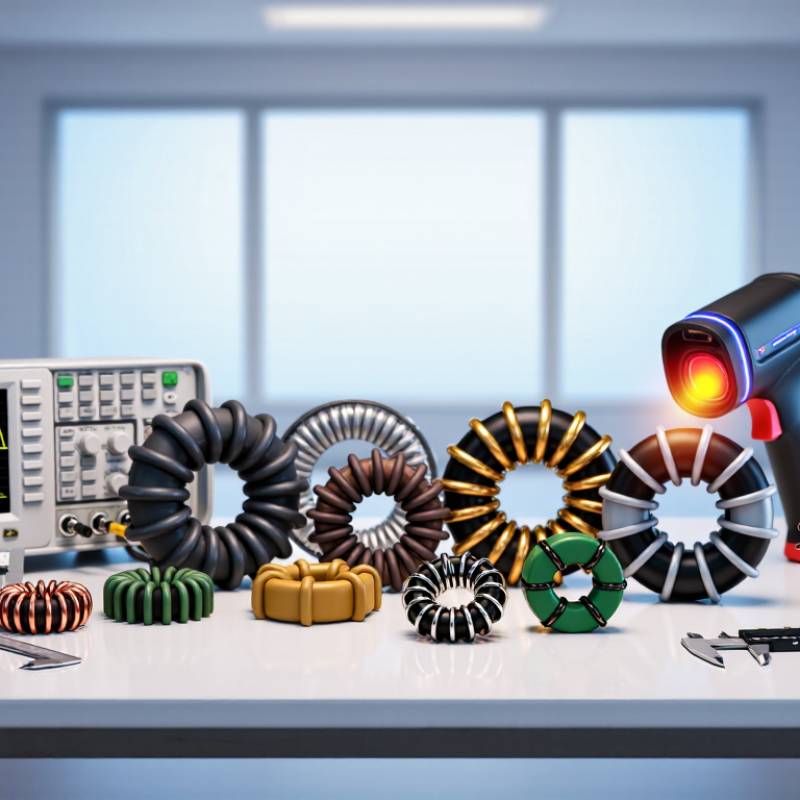
2026 Best Custom Inductors and Chokes for Global Buyers

What Custom Inductors and Chokes Are and Why They Matter in 2026

What Custom Inductors and Chokes Are and Why They Matter in 2026

Custom inductors store energy in magnetic fields and smooth current in power circuits. Chokes suppress unwanted noise across defined frequency ranges. Engineers specify winding count, core material, saturation current, resistance, and temperature limits. These details affect size, efficiency, and service life. The Semiconductor Industry Association reported global semiconductor sales of 627.6 billion dollars in 2024, a 19.1% annual increase. More chips mean more compact power systems. Custom magnetic components help control that pressure.

Tips: Start with real operating data, not only a schematic. Measure peak current, switching frequency, ambient temperature, and available space. Request saturation curves and thermal-test results from suppliers. Check insulation requirements early. A smaller component may create higher losses. That mistake is common.

The International Energy Agency expects data-center electricity demand to more than double by 2030. This trend increases demand for efficient converters, filters, and power distribution hardware. A custom choke can reduce electromagnetic interference while preserving usable energy. However, customization is not automatically better. It can increase tooling cost, minimum order quantities, and qualification time. Engineers should compare a tailored design with a carefully selected standard part. The best choice depends on measured performance, not impressive specifications.

2026 Best Custom Inductors and Chokes for Global Buyers

What Custom Inductors and Chokes Are and Why They Matter in 2026

Custom inductors and chokes are magnetic components designed for energy storage, filtering, impedance control, and electromagnetic interference suppression. The chart shows the ideal inductive reactance calculated at 100 kHz using XL = 2πfL. Higher inductance produces greater impedance at the same frequency, but real-world selection must also consider rated current, DC resistance, core loss, saturation current, self-resonant frequency, temperature rise, and package requirements.

The inductance values are representative engineering reference points rather than company or brand data. Actual component performance varies with construction, operating frequency, current, and core material.

How Custom Inductors Are Classified by Function, Core, and Construction

2026 Best Custom Inductors and Chokes for Global Buyers

Custom inductors are classified by function, core material, and construction. Function comes first. Power inductors store energy in converters, while signal inductors filter noise and preserve waveform quality. Common-mode chokes suppress interference on paired conductors. Differential chokes handle unwanted currents between lines.

The core determines performance. Ferrite cores suit high-frequency filtering because they offer low eddy-current loss. Powdered iron cores provide distributed air gaps and tolerate higher direct current. Nanocrystalline cores can deliver strong permeability and compact magnetic paths, but their cost and processing demands require careful evaluation. A 2024 market assessment by MarketsandMarkets valued the global inductor market at approximately 4.8 billion US dollars, with growth driven by electrification and power-density requirements.

Construction changes heat flow and reliability. Wire-wound parts usually provide higher inductance and current capacity. Multilayer designs save space but may face lower saturation limits. Shielded structures reduce magnetic leakage near sensors and communication circuits. Open constructions can cool effectively, yet they may radiate interference. Designers should compare inductance tolerance, saturation current, temperature rise, insulation distance, and mechanical stress under real operating conditions. Laboratory values are not always field values. This is where many selections fail. Customization should follow measured load profiles, not only a supplier drawing or nominal datasheet.

Which Specifications Global Buyers Should Define Before Ordering

For 2026 custom inductors and chokes, global buyers should define electrical requirements before discussing price. State the target inductance, tolerance, operating frequency, and maximum current. Include both rated current and saturation current. They are not interchangeable. Specify allowable DC resistance, impedance, and expected temperature rise. A converter working at 500 kHz may need a different core design than a power filter operating at 50 kHz. Small errors matter.

Mechanical details deserve equal attention. Provide the maximum length, width, height, pad layout, mounting method, and terminal orientation. Define the insulation system and required voltage rating, especially for equipment connected to high-voltage circuits. Ask for the working temperature range, storage conditions, and cooling assumptions. A compact component can perform poorly inside a sealed enclosure. Measure it twice.

Reliable suppliers should receive a clear test plan, not only a drawing. Request sample units, inductance readings at stated frequencies, DCR data, thermal results, and saturation curves. Specify acceptable tolerances after assembly, not just before shipment. Also define inspection levels, traceability, packaging, and required compliance documents for each destination market. Regional standards may differ, and translated specifications can hide ambiguity. A clean spreadsheet can still contain a weak assumption. Leave room for review after prototype testing, because calculated losses and real heating rarely match perfectly.

How to Evaluate Manufacturers, Compliance, Quality, and Supply Capacity

2026 Best Custom Inductors and Chokes for Global Buyers

Selecting a custom inductor starts with the application, not the catalogue. The International Energy Agency reported over 17 million electric cars sold in 2024. This growth increases demand for compact, thermally stable magnetic components. Ask manufacturers for saturation curves, temperature-rise data, core-loss figures, and impedance across the working frequency. A neat sample can still fail beside a hot inverter.

Compliance needs evidence.

Request material declarations, lot traceability, RoHS and REACH statements, plus test reports for insulation and electromagnetic performance. IEC 62368-1 may apply to equipment safety, while CISPR standards can guide emissions testing. ISO 9001 certification supports process control, but it does not prove every choke is reliable. That distinction matters. I have seen buyers accept a certificate and skip incoming inspection.

IEC 62368-1 may apply to equipment safety, while CISPR standards can guide emissions testing.

Supply capacity deserves equal scrutiny.

The IEA’s Electricity 2024 report expects strong electricity-demand growth through 2026, increasing pressure on power-electronic supply chains. Review monthly capacity, tooling ownership, second-source materials, and typical lead times. Ask how many production lots were rejected last quarter. The answer may be uncomfortable. Also check whether samples use the same winding machines and ferrite grades as mass production. A promising prototype is not manufacturing proof. Pilot orders, accelerated aging, and independent verification usually reveal more than polished presentations.

How to Compare Pricing, Lead Times, Samples, and Ongoing Support

For global buyers, custom inductors should be compared by total cost, not unit price alone. A lower quote may exclude tooling, magnetic-core changes, testing, or export packaging. Grand View Research projects the global inductor market to grow at about 5% annually through 2030. That growth increases capacity pressure. Ask suppliers for a cost breakdown, annual-volume tiers, and a validity period for quotations.

Lead time needs evidence. Request separate dates for engineering review, samples, tooling, pilot production, and repeat orders. A practical sample window is often two to six weeks, but complex high-current parts may take longer. The 2024 ECIA Electronic Component Supply Chain Report highlighted continuing uncertainty in component availability and delivery schedules. Treat “standard lead time” carefully. It can mean anything. Confirm the production week in writing.

Samples should match production materials and winding methods, not merely electrical values. Measure inductance, saturation current, temperature rise, and insulation performance at defined conditions. Ask for test records and change-notification procedures. Ongoing support also matters: can the supplier adjust wire diameter, core geometry, or thermal design after testing? In real projects, engineering communication often saves more money than a small price reduction. I have seen buyers focus too heavily on the first quote. That is a mistake worth revisiting. Reference data: Grand View Research, Inductor Market Size Report; ECIA, Electronic Component Supply Chain Report, 2024.

FAQS

Which electrical specifications should buyers define before ordering custom inductors?

State inductance, tolerance, operating frequency, maximum current, and allowable resistance. Rated current and saturation current are different values. Also define impedance and acceptable temperature rise. Small errors matter.

Why does operating frequency affect the inductor design?

A converter at 500 kHz may need a different core than a filter at 50 kHz. Core losses and heating can change significantly. Frequency cannot be treated as a minor detail.

What mechanical information should buyers provide?

Provide maximum length, width, height, pad layout, mounting method, and terminal direction. Include the insulation system and required voltage rating. Measure the available space twice.

Which environmental conditions should be included in the specification?

Define operating temperature, storage temperature, humidity, and cooling conditions. A compact component may overheat inside a sealed enclosure. Airflow assumptions can be wrong.

What test information should buyers request from manufacturers?

Request sample measurements at stated frequencies, including inductance and resistance. Ask for saturation curves, thermal results, insulation tests, and impedance data. A clean datasheet is not enough.

How can buyers evaluate compliance and traceability?

Request material declarations, lot records, safety reports, and electromagnetic test evidence. Confirm which documents apply to each destination market. Translated specifications may hide ambiguity.

How should buyers check whether a manufacturer can support production volume?

Ask about monthly capacity, tooling ownership, material sources, and normal lead times. Check whether samples use production machines and matching core materials. A promising prototype proves very little.

How should buyers compare supplier prices and lead times?

Request a cost breakdown covering tooling, testing, packaging, and engineering changes. Separate the schedule for samples, tooling, pilot production, and repeat orders. “Standard lead time” can mean almost anything.

What should buyers verify during sample approval?

Confirm inductance, saturation current, temperature rise, insulation performance, and actual materials. Compare results under realistic operating conditions. Calculated losses and real heating rarely match perfectly.

Conclusion

In 2026, Custom Inductors and Chokes remain essential for managing current, reducing electromagnetic interference, stabilizing power systems, and improving the efficiency of electronic equipment. This guide explains how these components are classified by function, magnetic core material, winding method, shielding, and overall construction. It also highlights the key specifications global buyers should define before ordering, including inductance, rated current, tolerance, DC resistance, operating temperature, size, insulation, and application environment.

The article further outlines a practical method for evaluating manufacturers by examining engineering capability, quality systems, compliance documentation, testing procedures, production capacity, and supply continuity. Buyers will also learn how to compare pricing, sample policies, lead times, minimum order quantities, customization support, and long-term technical service. By considering both performance requirements and supplier reliability, purchasers can select suitable Custom Inductors and Chokes that support stable product development, controlled costs, and dependable global supply.


Oliver

Oliver

Oliver is a dedicated and experienced marketing professional specializing in delivering strategic insights and innovative solutions for our company. With a deep understanding of our core business and its complexities, he effectively communicates the unique advantages that set us apart in the......