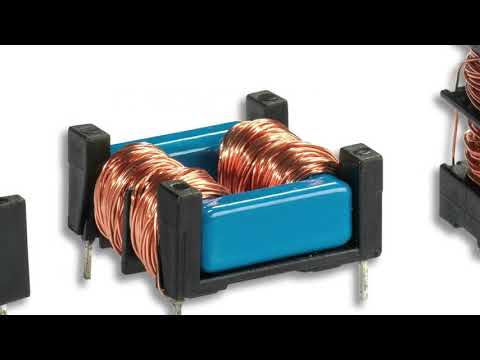

The Crucial Role of Food Equipment Magnetics in Modern Food Processing
In modern industrial food processing, commercial food service, and automated packaging lines, electrical component failure is not merely an inconvenience—it represents potential food contamination risks, compromised batch safety, and catastrophic operational downtime. Food Equipment Magnetics encompass the specialized magnetic components, including step-up/step-down power transformers, common mode filter chokes, high-frequency flyback transformers, and current sensing devices, specifically designed to function reliably inside harsh, washdown-heavy food processing environments.
Unlike general-purpose industrial transformers, magnetic components specified for food machinery must withstand rigorous daily sanitation protocols. These include direct exposure to high-pressure chemical washdowns (such as sodium hydroxide or chlorine solutions at pressures up to 100 bar and temperatures up to 80°C), continuous humidity, extreme ambient thermal swings (from sub-zero industrial freezing tunnels to 200°C commercial baking ovens), and intense mechanical vibration. Achieving uncompromised performance under these conditions requires deep expertise in materials science, specialized encapsulation techniques, precise electromagnetic coil winding, and strict adherence to global regulatory frameworks including FDA, NSF, EHEDG, UL, CSA, and CE directives.
Engineering Information Gain: Magnetic Failure Modes in Food Washdown Zones
Standard open-frame or varnish-dipped transformers fail rapidly in food facilities due to three primary environmental vectors: chemical oxidation of core laminations, micro-fracturing of insulation under high-pressure thermal shock, and dielectric breakdown caused by moisture ingress. Triad Magnetics mitigates these failure modes through vacuum pressure impregnation (VPI), high-grade UL Class H (180°C) epoxy encapsulation, and specialized corrosion-resistant potting compounds certified for zero-microbial harbor spaces.
Specialized Magnetic Component Recommendations for Food Machinery OEMs
Selecting the optimal magnetic component geometry and electrical profile is essential for maintaining equipment longevity and power stability. Below are the primary product families engineered by Triad Magnetics for food processing equipment, commercial kitchen appliances, and packaging machinery.
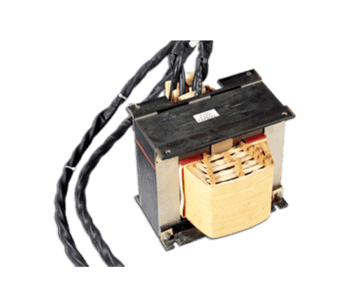
Custom Washdown Isolation Transformers
Fully potted, IP69K-rated isolation transformers engineered to isolate sensitive digital controls from mains power fluctuations while resisting caustic CIP (Clean-in-Place) sanitation cycles.
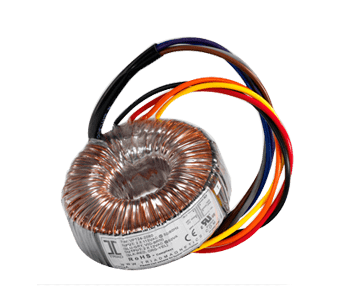
UL Class-2 Power Transformers
Energy-efficient Class-2 power transformers certified under UL 5085-3. Designed specifically for low-voltage food service touchscreens, digital thermostats, and automated valve controllers.
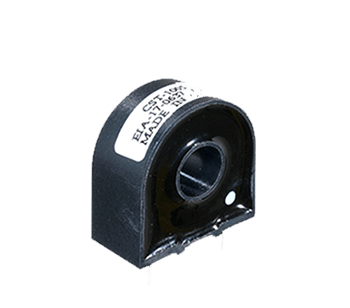
Precision Current Sense Transformers
Non-intrusive current measurement transformers for real-time telemetry on conveyor motors, cutter blades, and heating elements. Enables instant predictive maintenance signals in PLC systems.
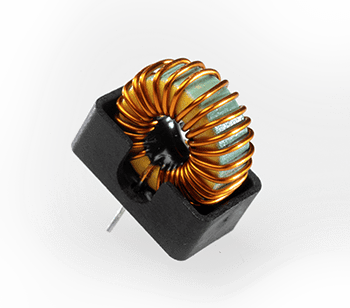
Dual-Function EMI Filter Chokes
Combined common-mode and differential-mode noise suppression chokes. Essential for preventing harmonic interference from high-power variable frequency drives (VFDs) in industrial blenders and pumps.
Technical Performance Comparison Matrix for Food Grade Magnetics
To assist OEM design engineers in specifying the exact magnetic topology required for specific food equipment operational zones, Triad Magnetics provides the following technical matrix:
| Equipment Application | Recommended Magnetic Topology | Primary Environmental Threat | Required Certification / Compliance |
|---|---|---|---|
| Industrial Meat Grinders & Slicers | VFD Input Filter Chokes & High-Current Sense Transformers | Continuous high mechanical torque, motor back-EMF spikes | UL 5085-1, IP67 Enclosure Rating |
| Commercial Steam Convection Ovens | Class H (180°C) High-Temp Step-Down Power Transformers | Continuous ambient heat (120°C–180°C), steam humidity | UL Class H Insulation, NSF/ANSI Standard 4 |
| High-Speed Beverage Bottling Lines | High-Frequency Switch Mode Magnetics & Planar Transformers | Rapid 24/7 cycling, severe electrical noise EMI | IEC 61558-2-16, CE Compliance, RoHS/REACH |
| Sub-Zero Automated Freezing Tunnels | Epoxy-Encapsulated Low-Temp Power Magnetics | Thermal contraction stress, condensation cycles (-40°C) | MIL-STD-202 Method 107 Thermal Shock Compatible |
Future Procurement Trends & Industry Development in Food Equipment Magnetics (2026–2030)
The global food processing machinery market is undergoing a seismic transformation driven by automated smart manufacturing (Industry 4.0), stringent international food safety mandates, and urgent sustainability goals. OEM procurement managers and design engineers must align their component sourcing strategies with several overarching technical trends:
1. Transition to IP69K Hygienic Design Standards
Traditional NEMA 4X enclosures are increasingly being replaced by fully integrated, seamless IP69K hygienic equipment designs. OEMs are demanding magnetic components that do not rely entirely on secondary heavy stainless steel outer enclosures. By specifying directly potted, non-porous encapsulated transformers, machine builders reduce overall footprint, eliminate micro-gap bacteria breeding grounds, reduce machine weight, and simplify daily washdown procedures for end-user food plants.
2. Widespread Integration of Smart Current Sensing for Predictive Maintenance
Unscheduled machine downtime in food processing plants can cost upwards of $30,000 per hour in lost yield and spoiled batch inventory. As a result, food machinery procurement teams are mandating built-in current sensing capabilities at every major motor drive, pump, and heating node. Modern Food Equipment Magnetics now integrate high-accuracy current sense transformers directly into machine control PCBs, feeding real-time amperage consumption curves to cloud analytics platforms to detect mechanical wear before catastrophic component failure occurs.
3. Ultra-High Energy Efficiency & Eco-Design Directives
Global regulatory pressure, such as the EU Eco-design Requirements and US Department of Energy (DOE) efficiency mandates, is forcing food equipment manufacturers to minimize no-load losses and operational heat dissipation. Advanced magnetic core materials—such as high-permeability amorphous alloy cores, low-loss ferrite materials, and grain-oriented silicon steel—are replacing legacy laminations. These materials lower core losses by up to 35%, reducing total operating costs in commercial refrigeration and continuous cooking systems.
4. Dual-Voltage Global Platform Harmonization
Global food machinery OEMs are seeking to standardize their equipment platforms across North America (120V/240V/480V 60Hz) and European/Asian markets (230V/400V 50Hz). Triad Magnetics meets this demand by designing multi-tap universal primary power transformers that allow food equipment manufacturers to build single unified control boxes, drastically simplifying global inventory management and procurement complexity.
Why Global Food Equipment OEMs Partner with Triad Magnetics
For more than 75 years, Triad Magnetics has served as an industry-leading authority in precision magnetic design and manufacturing. Our engineering excellence, combined with robust quality systems, makes us the preferred partner for tier-1 food equipment OEMs worldwide.
75+ Years of Engineering Legacy
Founded in 1946 in Southern California, Triad Magnetics pioneered custom magnetic components for industrial power, medical devices, and aerospace systems. Our engineering database contains thousands of field-proven food-grade designs.
ISO 9001:2015 & Dual-Facility Production
Our ISO 9001:2015 certified manufacturing plants in Perris, California and the Philippines deliver redundant global supply chain flexibility, offering low-volume rapid prototyping alongside cost-competitive high-volume mass production.
Our engineering team works as an extension of your R&D department. From custom core selection, wire insulation rating, thermal modeling, and electrostatic shielding to full electrical safety compliance testing (UL, CSA, CE, TUV), Triad Magnetics ensures your food machinery meets the highest standards of safety and performance.
Frequently Asked Questions: Food Equipment Magnetics Procurement & Engineering
Below are detailed answers to key questions frequently asked by OEM design engineers, procurement directors, and system integrators regarding food-grade magnetics.
Food Equipment Magnetics are specifically designed to endure harsh sanitation environments and stringent health codes. Key differentiators include:
- High Ingress Protection (IP67/IP68/IP69K): Complete encapsulation prevents ingress of high-pressure steam, water, and caustic chemicals.
- Hygienic Materials: Use of non-porous, smooth, non-toxic epoxy resins and corrosion-resistant enclosures (such as 316L stainless steel or nickel-plated hardware) that resist microbial growth.
- Thermal Cycling Resilience: Insulation systems rated up to Class H (180°C) or Class N (200°C) capable of enduring rapid temperature fluctuations from cold washdowns during high-temperature operations.
- Compliance Standards: Conformity with FDA material guidelines, NSF standards, UL 5085 electrical safety, and CE directives.
Field inspectors evaluate equipment for electrical safety (UL 5085/UL 60601-1) and sanitary design (NSF/ANSI 4). Triad Magnetics designs components with pre-approved UL insulation systems (File numbers accessible upon request), adequate creepage and clearance distances, zero open crevices, and flame-retardant (UL 94 V-0) materials. Incorporating pre-certified magnetic sub-assemblies dramatically accelerates final machine-level certification and eliminates costly re-design delays.
UL Class-2 transformers (governed by UL 1310 and UL 5085-3) limit output energy to safe voltage and power levels (typically under 30V AC / 60V DC and less than 100VA). In wet or humid commercial kitchen environments, using Class-2 power modules for user-interface touchpads, LED displays, and sensors drastically reduces electrical shock hazards for kitchen staff and simplifies machine wiring requirements under the National Electrical Code (NEC).
Vacuum pressure impregnation forces electrical insulating varnish or epoxy deep into every void within the transformer coil windings, removing air bubbles. In food applications, VPI eliminates moisture traps, enhances heat dissipation from the copper coils to the ambient air, increases dielectric strength, and prevents internal coil vibration noise caused by magnetic magnetostriction.
Triad Magnetics provides fast prototype turnarounds for OEM custom designs. Simple modifications of standard catalog parts can often be delivered in as little as 1 to 2 weeks, while complex fully engineered custom prototypes (complete with custom tooling and specialized encapsulation) typically take 3 to 5 weeks depending on material availability and testing protocols.