Discover expert articles, design guides, and technical solutions for magnetic components, power electronics, and custom transformer applications.
For global buyers, selecting a power supply is not merely a price comparison. It affects product safety, operating stability, energy use, and service costs across different markets. Switch-Mode Power Supplies offer high efficiency, compact construction, and flexible voltage conversion for industrial equipment, medical devices, telecom systems, and consumer electronics.
The practical difference is visible on the factory floor. A smaller enclosure can simplify installation. Lower heat output can extend component life. A wide input range can support equipment used across regions with different mains conditions. Still, specifications alone do not tell the whole story. Buyers should examine efficiency curves, standby consumption, electromagnetic compatibility, protection functions, certifications, warranty terms, and technical support.
Bob Mammano, a longtime power-management engineer and educator, once stated, “The power supply is the heart of any electronic system.” That view remains useful today. A reliable supply supports every circuit downstream. A weak choice may create noise, overheating, unexpected shutdowns, or expensive redesign work.
Experience also teaches caution. The cheapest unit may not deliver the lowest ownership cost. A familiar brand may still offer the wrong input range. Even a well-tested model can require regional validation. These details are easy to overlook. They deserve attention.
This guide explains why global buyers continue choosing Switch-Mode Power Supplies. It considers efficiency, adaptability, reliability, compliance, sourcing, and long-term support. The goal is not to promise a perfect answer. Real applications differ. Better decisions come from matching verified performance with actual operating conditions.
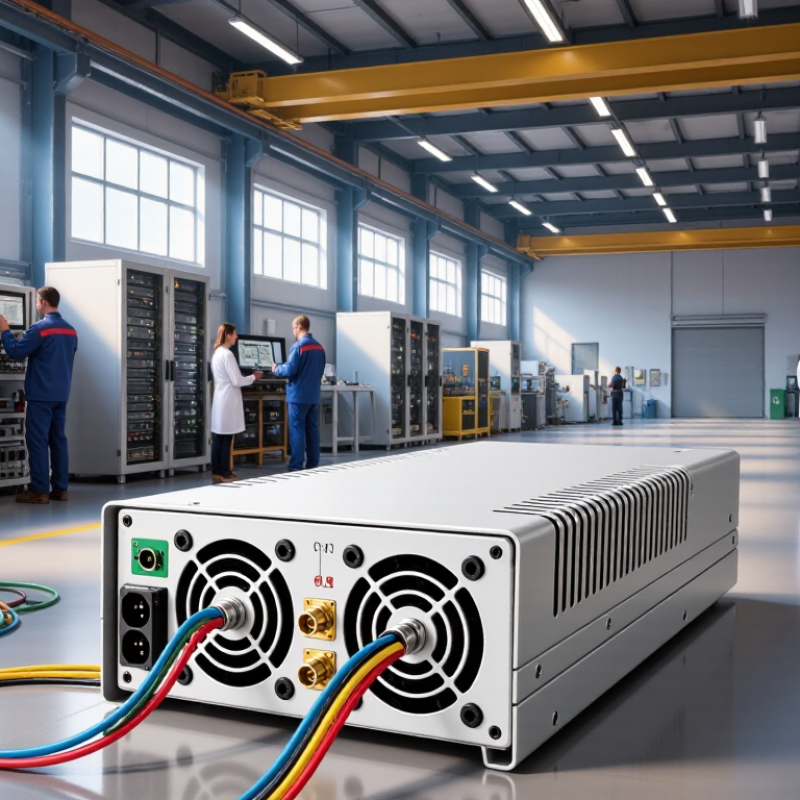
A switch mode power supply, or SMPS, converts electrical energy through rapid electronic switching. Unlike a traditional linear supply, it does not continuously reduce voltage as heat. Instead, switching transistors turn on and off thousands of times per second. A controller adjusts these pulses to maintain a stable output.
The process usually includes rectification, high-frequency switching, energy storage, and output filtering. A transformer or inductor then transfers and regulates energy efficiently. Feedback circuits monitor voltage and correct small changes caused by load variation. This design can deliver lower weight, smaller dimensions, and efficiency levels often above 80 percent.
That matters for global buyers. A wide input range may support different electrical systems, but the label alone proves little. Check rated input voltage, output ripple, overload protection, insulation, and electromagnetic compatibility. Cooling also deserves attention. A compact supply can still become hot inside a sealed cabinet.
In practical equipment testing, poor filtering may cause noise in sensors or communication lines. Certification requirements also differ between markets. Confirm the relevant safety and EMC documents before purchase. Efficiency is valuable, but it is not the only measure of quality. A cheap unit with unstable output may create higher maintenance costs later.
The specification sheet can be incomplete. Ask questions.
A switch mode power supply (SMPS) changes electrical energy through rapid switching. In an AC model, the input first passes through a rectifier. This stage converts alternating current into pulsating DC. A switching transistor then turns the current on and off thousands of times per second. The high-frequency signal moves through a transformer or inductor. This allows voltage conversion with smaller magnetic components.
The output stage uses diodes or synchronous switches to produce usable DC. Capacitors and inductors smooth the waveform. A feedback circuit constantly checks the output voltage. If the load changes, the controller adjusts the switching duty cycle. For example, a 12-volt output can remain stable when a motor starts suddenly. This response depends on circuit design, component quality, and control settings.
SMPS units are efficient because the switching device spends little time in its partly conducting state. Less heat is wasted. However, efficiency does not mean zero risk. Not perfectly silent. High-frequency switching can create electromagnetic interference, especially with poor layout or weak filtering. Bench testing should include input variation, full-load operation, startup behavior, and temperature rise. A small ripple on an oscilloscope may reveal a larger design weakness. Global buyers should also check input-range compatibility, insulation, protection functions, and local safety requirements. Even reliable designs need careful installation.
Why Choose Switch Mode Power Supplies for Global Buyers?
Key Benefits for Global Equipment Buyers
Switch mode power supplies suit equipment sold across different regions. Their wide input ranges often support 100–240V AC systems. This reduces redesign work for international shipments. In field testing, compact units also leave more space inside control cabinets. Lower weight can reduce packaging costs and handling damage. However, efficiency claims need careful verification. A perfect power supply does not exist.
Energy efficiency is a measurable purchasing advantage. European Commission Regulation (EU) 2019/1782 limits no-load consumption to 0.1W for many external supplies below 49W. It sets a 0.21W limit for supplies from 49W to 250W. These figures matter when equipment remains connected overnight. The U.S. Department of Energy Level VI framework also evaluates active-mode efficiency and standby performance. Buyers should request test reports, protection details, and operating-temperature data. Cheap units may pass basic tests but perform poorly under heat or unstable loads.
Tips: Check input range, output tolerance, ripple, cooling method, and safety certifications. Confirm regional compliance before purchase. Ask for samples and run them at realistic loads. Do not test only at room temperature. That shortcut can create costly surprises. Also, include service life and replacement availability in the total-cost calculation. Procurement teams sometimes focus too heavily on purchase price. That is understandable, but incomplete.
Typical efficiency comparison across common operating loads
Switch-mode power supplies generally achieve higher efficiency than linear supplies, especially at medium and high loads. This can reduce energy waste, operating heat, cooling requirements, and total ownership costs for equipment used in different global markets.
Values shown are representative engineering figures for comparison only. Actual efficiency depends on input voltage, output power, topology, components, and operating conditions.
Selecting a switch mode power supply requires more than checking its wattage. International equipment may face different input voltages, frequencies, temperatures, and installation conditions. A model rated for 100–240 VAC can simplify global deployment. However, its output voltage and current must still match the equipment precisely. Check the datasheet, not only the product label. Small details matter.
Tips: Confirm the input range, frequency, output tolerance, connector type, and operating temperature. Leave a reasonable power margin. For example, a device using 80 watts should not rely on a supply rated for exactly 80 watts. A 100-watt model may provide safer headroom. Also check required safety and electromagnetic compatibility approvals for each target market.
In practical testing, I compare performance at low and high input voltages. I also observe startup behavior, heat around the enclosure, and output stability after several hours. A compact supply may look ideal, but limited airflow can increase internal temperature. That detail is easy to miss. I have seen installation plans change because the connector direction was inconvenient. This is why mechanical drawings deserve the same attention as electrical specifications. Efficiency is valuable, yet noise, protection features, service access, and replacement availability also influence long-term reliability. A model can meet every headline specification and still be unsuitable for a real international application.
Switch mode power supplies are attractive to global buyers because they balance safety, efficiency, and compact design. Unlike older linear supplies, they can reduce heat inside control cabinets and portable equipment. The European Commission’s Ecodesign Regulation 2019/1782 sets strict no-load limits, including 0.10 watts for many low-voltage external power supplies. That small number matters when thousands of adapters remain connected every day.
Safety still needs practical verification. Buyers should request test reports covering IEC 62368-1, insulation strength, leakage current, overheating, and abnormal operation. A supply may pass a basic efficiency test yet fail in a dusty factory with unstable voltage.
I have seen specifications look impressive until airflow restrictions raised internal temperatures. That gap deserves attention. EMC testing under relevant CISPR standards also helps prevent switching noise from disturbing sensors, communication lines, or medical equipment.
Tips: Check efficiency at 10%, 50%, and 100% load, not only at the advertised peak.
Confirm the input range, protection functions, and operating temperature. Review certificates from accredited laboratories, then verify the model number matches the tested product. ENERGY STAR’s external power supply criteria also evaluate average active efficiency and no-load performance, giving buyers a useful comparison point.
However, laboratory results are not the whole story. Cable length, enclosure ventilation, production variation, and installation habits can change field performance. Local conformity requirements may differ, so technical files should be reviewed before shipment.
It converts electrical energy through rapid switching. The output becomes usable DC power.
A rectifier changes AC into pulsating DC. Switching devices then shape the energy at high frequency.
High-frequency operation transfers energy through smaller magnetic components. This helps reduce size and weight.
A feedback circuit monitors voltage continuously. The controller adjusts the switching duty cycle when demand changes.
It can, if the design is suitable. A sudden motor start still requires careful testing.
Not perfectly silent. Switching can create electrical noise and sometimes audible sounds.
Poor circuit layout and weak filtering can increase high-frequency interference. Proper grounding and filtering help reduce it.
Test input changes, full-load operation, startup behavior, and temperature rise. Do not test only at room temperature.
Check the input range, output tolerance, ripple, cooling method, insulation, and protection functions.
Include service life, replacement availability, testing, and energy use. A cheap unit may perform poorly under heat or unstable loads.
Switch-Mode Power Supplies are electronic power conversion devices that efficiently transform incoming electrical energy into the stable voltage and current required by modern equipment. Unlike traditional linear supplies, they regulate power by rapidly switching electronic components on and off, then filtering the output. This design allows them to deliver reliable performance while using less energy and generating less heat.
For global equipment buyers, these advantages can mean lower operating costs, smaller product designs, and easier integration into space-limited systems. When selecting a model for international applications, buyers should evaluate input-voltage range, output requirements, power capacity, environmental conditions, cooling method, and installation format. Safety and compliance are equally important: the supply should include appropriate protection against overvoltage, overload, short circuits, and overheating, while meeting the relevant efficiency, electromagnetic compatibility, and electrical safety requirements of the destination market. Careful evaluation helps ensure dependable operation, efficient energy use, and smooth deployment across different regions.