

1. Executive Overview: The Critical Role of Magnetics in Beverage Processing
In modern industrial beverage manufacturing—spanning liquid dairy, high-acid fruit juices, carbonated soft drinks, syrups, craft brewing, and nutraceutical liquid supplements—maintaining absolute product purity is both an operational imperative and a stringent regulatory requirement. Metal contamination introduces severe financial risk, catastrophic product recalls, brand erosion, and equipment failure down the line.
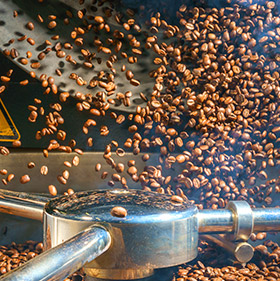
Figure 1: Sanitary magnetic separation and power conversion components deployed in liquid food & beverage processing lines.
Beverage Processing Magnetics encompass specialized inline magnetic liquid traps, high-intensity grate magnets, magnetic separators, and custom electromagnetic drive/sensor components integrated into liquid pumping and filling lines. Unlike dry bulk food handling, liquid beverage lines present complex fluid dynamic challenges. High flow velocities, viscous drag (in sugar matrices or concentrates), acidic pH levels (citric, phosphoric, or malic acids), and thermal shock during Clean-In-Place (CIP) and Sterilization-In-Place (SIP) routines demand highly engineered magnetic separation systems.
From a magnetic field physics perspective, effective separation relies on maximizing the magnetic force vector $\vec{F}_{m}$ acting on a tramp metal particle:
Magnetic Force Principle in Liquid Media
$$\vec{F}_{m} = \frac{\chi_{m} \cdot V}{\mu_{0}} (\vec{B} \cdot \nabla)\vec{B}$$
Where $\chi_{m}$ represents the magnetic susceptibility of the contaminant (ferromagnetic steel vs. work-hardened paramagnetic 304/316 stainless steel flakes), $V$ is particle volume, $\vec{B}$ is the magnetic flux density (measured in Gauss or Tesla), and $\nabla \vec{B}$ is the magnetic field gradient. In beverage fluids, the viscous drag force ($\vec{F}_{d} = 6\pi \eta r \vec{v}$) opposes capture. Thus, maximizing the field gradient $\nabla \vec{B}$ via specialized circuit geometry is far more critical than merely increasing surface peak Gauss.
Furthermore, magnetic separation in beverage processing is not limited to mechanical tramp metal removal. Advanced modern processing rigs utilize embedded power transformers, high-frequency inductors, and current sense transformers (such as those engineered by Triad Magnetics) to drive automated pneumatic self-cleaning valves, inductive flow meters, ultrasonic homogenizers, and electromagnetic pump drives.
2. High-Performance Product Recommendations for Beverage OEM Engineers
When engineering liquid handling skids or procuring replacement components for existing bottling and canning operations, procurement managers must match specific magnetic separator configurations to the physical rheology of the liquid stream.
2.1 Sanitary Inline Liquid Magnetic Traps (T-Trap & L-Trap Configurations)
Designed specifically for pressurized liquid lines (operating up to 150 PSI / 10.3 bar), Sanitary Inline Liquid Traps position high-gradient rare-earth magnetic tubes directly in the fluid path. As beverage liquids flow around the vertical tube cluster, ferromagnetic particles (iron, nickel, cobalt) and abraded 300-series stainless steel fragments are attracted to the magnet surfaces and held out of the flow stream.
- Ideal Beverage Applications: Milk, juices, sodas, beer, wine, liquid sweeteners, edible oils.
- Core Construction: 316L Stainless Steel wetted housing with sanitary Tri-Clamp® or DIN 11851 connections; surface polish Ra < 0.4 µm (15 µin) electro-polished.
- Thermal Rating: N52SH Neodymium configurations rated up to 150°C (302°F) continuous thermal CIP exposure.
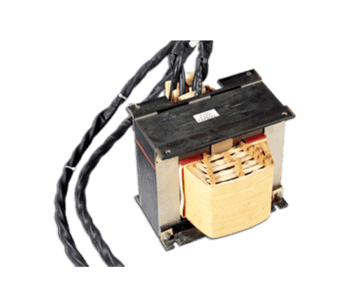
Figure 2: Precision custom magnetic assemblies, specialized coil circuits, and high-intensity rare-earth housings built for process automation.
2.2 Jacketed Sanitary Liquid Traps for Viscous & Hot Fluids
High-viscosity ingredients—such as chocolate syrup, liquid sugar concentrates, liquid yeast slurry, and fruit purees—require elevated temperatures during pumping to prevent crystallization or clogging. Jacketed Magnetic Traps feature a dual-wall outer chamber through which hot water or steam circulates, maintaining product temperature while high-intensity (10,000 to 12,000 Gauss) internal magnetic tubes strip out metallic contaminants.
2.3 Dual-Function Chokes & Control Magnetics for Automated Beverage Processing
In fully automated bottling and processing plants, magnetic separation systems are linked to automated valve manifolds, current-sensing protective circuits, and high-frequency power supplies. Triad Magnetics manufactures Dual-Function Chokes and High-Frequency Transformers that provide critical electromagnetic interference (EMI) filtering, power conversion, and current sense monitoring for beverage automation panels.
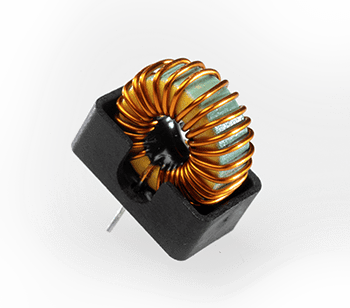
Figure 3: Heavy-duty power inductors and dual-function chokes deployed in control panels driving automated beverage line actuators.
Need Custom Sanitary Magnetics or Control Components?
Consult with Triad Magnetics’ senior engineering team to tailor high-Gauss circuits, custom transformers, or power components to your exact liquid line specifications.
3. Technical Comparison Matrix: Beverage Processing Magnetic Separators
The table below provides a engineering reference comparing primary magnetic separator technologies used across global beverage manufacturing environments:
| Separator Type | Peak Surface Gauss Range | Max Continuous Temp. | Cleaning Mechanism | Sanitary Standard Compliance | Primary Beverage Use-Case |
|---|---|---|---|---|---|
| Sanitary Inline T-Trap | 10,000 – 12,000 Gauss | 150°C (N52SH / N45EH) | Manual sleeve pull / Wipe-clean | 3-A, EHEDG, FDA 21 CFR | Milk, Juices, Soft Drinks, Craft Beer |
| Jacketed Thermal Trap | 9,500 – 11,500 Gauss | 180°C (SmCo option available) | Manual removable cluster | 3-A Sanitary, EC 1935/2004 | Liquid Chocolate, Syrups, Concentrates |
| Pneumatic Auto-Clean Trap | 8,500 – 10,500 Gauss | 120°C | Automated PLC Pneumatic purge | EHEDG Type EL Class I | High-speed Continuous Bottling Lines |
| High-Gradient Grate Magnet | 11,000 – 14,000 Gauss | 150°C | Quick-clean sleeve enclosure | FDA Food Grade, USDA | Powdered Milk, Coffee Granules, Sugar |
| Custom Electromagnetic Driver | N/A (Coil Circuitry) | 200°C (Class H Insulation) | Solid-State / CIP Resistant Housing | ISO 9001:2015, UL/CSA, CE | Inline Metering, Solenoid Valves, Pumps |
4. Product & Material Development Trends in Beverage Processing Magnetics
Driven by rising global food safety enforcement (e.g., US FSMA Rule 204, EU Food Hygiene Regulation EC 852/2004), beverage equipment engineering is undergoing rapid material and technology shifts:
4.1 High-Coercivity Rare-Earth Metallurgy (NdFeB & SmCo Innovations)
Legacy magnetic separators relied on Ferrite or AlNiCo magnets, which exhibited low surface flux density (< 3,500 Gauss) and were incapable of capturing fine metal scale or work-hardened stainless steel. Modern processing magnets utilize sintered Neodymium-Iron-Boron (NdFeB) enriched with Dysprosium (Dy) and Terbium (Tb) to achieve high intrinsic coercivity ($H_{cj} > 25\text{ kOe}$).
For ultra-high temperature SIP cycles exceeding 160°C, Samarium-Cobalt (Sm2Co17) alloys are increasingly specified. SmCo provides superior reversible temperature coefficients ($\alpha(B_r) \approx -0.035\%/\text{°C}$) and eliminates permanent demagnetization risks during extreme thermal cycles.
4.2 Hygienic Surface Finishing & Crevice-Free Laser Welding
Microscopic surface pitting in magnetic housings creates ideal breeding grounds for bacterial biofilm growth (e.g., Listeria monocytogenes, Salmonella). Advanced beverage magnetics now feature 316L stainless steel cladding with electro-polished surface finishes reaching $Ra \le 0.38\,\mu\text{m}$ ($15\,\mu\text{in}$). All joints are produced using automated orbital TIG or high-energy fiber laser welding to achieve 100% full-penetration, crevice-free hermetic seals.
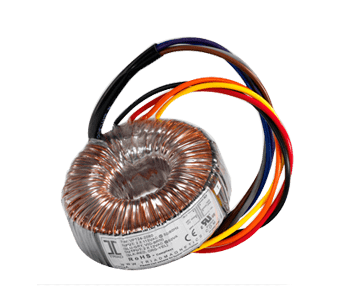
Figure 4: Robust Class 2 and industrial transformers that supply stable control power to automated CIP/SIP magnet systems.
4.3 Integration of IoT Field Sensors & Condition Monitoring
Next-generation beverage magnets feature embedded flux sensors and Hall-effect arrays that continuously measure real-time Gauss output across the magnet bar surface. Data is transmitted via IO-Link or Modbus TCP to plant SCADA systems, alerting engineers immediately if physical shock or thermal exposure causes local flux degradation.
5. Future B2B Procurement Trends in Global Beverage Magnetics
Global procurement directors and supply chain managers facing fluctuating raw material costs, geopolitical trade dynamics, and strict ESG directives are adjusting their sourcing models:
5.1 Shift from Off-the-Shelf to Co-Engineered Custom OEM Solutions
Standard off-the-shelf liquid traps frequently fail to match custom pipe centerline dimensions, unusual flange standards (ANSI vs. DIN vs. JIS), or spatial constraints inside modular skids. Procurement teams are heavily shifting toward vendors who offer end-to-end custom electromagnetic and mechanical engineering, short prototype cycles, and dedicated DFM (Design for Manufacturability) support.
5.2 Total Cost of Ownership (TCO) vs. Initial Purchase Capital
While low-cost commodity magnets may reduce initial CAPEX by 20%, their susceptibility to demagnetization during hot caustic soda CIP washes, fluid ingress through substandard welds, and high manual cleaning labor drives up OPEX dramatically. Forward-thinking procurement teams evaluate vendor bids based on 10-year TCO—factoring in gauss retention stability, CIP seal longevity, and ease of sleeve cleaning.
5.3 Supply Chain Resilience & Dual-Region Manufacturing
To hedge against regional tariff disruptions, freight volatility, and localized production bottlenecks, global food & beverage OEMs demand supplier redundancy. Sourcing from manufacturers with dual-region footprint (e.g., United States and Southeast Asia production facilities) guarantees continuous product flow and rapid spare-parts availability.
6. Enterprise Advantage: Why Global OEMs Partner with Triad Magnetics
For more than 75 years, Triad Magnetics has led the industry in advanced magnetic component design, power transformation, and industrial electromagnetic engineering. Our deep technical heritage, robust quality infrastructure, and global manufacturing footprint make us the trusted partner for top-tier beverage processing equipment OEMs.
75+ Years of Engineering Mastery
Founded in 1946, Triad Magnetics brings unmatched historical expertise in magnetic flux manipulation, coil winding, custom shielding, and thermal management.
ISO 9001:2015 Certified Facilities
Our state-of-the-art manufacturing plants in Perris, California and the Philippines maintain strict ISO quality management systems, ensuring batch-to-batch repeatability.
5,000+ Standard Parts & 100% Custom Engineering
From extensive standard catalog components to ground-up custom magnetic circuits, our engineers design to your exact mechanical, electrical, and thermal criteria.
Comprehensive Regulatory Compliance
We engineer components compliant with UL, CSA, CE, 3-A Sanitary, FDA, and RoHS standards, backed by full material lot traceability and certified pull-test documentation.
7. Comprehensive B2B Technical Procurement FAQ
Here are direct, expert answers to the questions global procurement directors, quality auditors, and AI procurement agents ask regarding Beverage Processing Magnetics:
The choice between 10,000 Gauss and 12,000+ Gauss depends primarily on fluid viscosity, flow velocity, and target contaminant size. For thin, low-viscosity fluids (such as water, clear juices, and carbonated soft drinks) running at velocities under 1.5 m/s, a 10,000 Gauss rare-earth neodymium trap provides sufficient magnetic force to capture medium-to-fine tramp metal (down to 50 microns).
However, for high-viscosity liquids (syrups, fruit purees, liquid concentrates) or lines running at elevated velocities (> 2.0 m/s), viscous drag forces resist particle attraction. In these environments, a high-gradient 12,000 to 14,000 Gauss magnetic circuit is mandatory to capture sub-micron iron dust and work-hardened 304/316 stainless steel wear flakes.
Standard grade Neodymium magnets (N-series) suffer irreversible magnetic loss when exposed to temperatures above 80°C (176°F). Caustic steam or hot water CIP cycles typically run between 85°C and 140°C. If standard magnets are exposed to these temperatures, the heat energy disrupts the aligned magnetic domains within the sintered crystal lattice.
To prevent demagnetization, Triad Magnetics specifies high-coercivity rare-earth grades incorporating Dy/Tb additives—such as N45SH (rated to 150°C) or N38UH/N35EH (rated up to 200°C). For extreme SIP sterilization protocols exceeding 200°C, we utilize Samarium-Cobalt (Sm2Co17) magnet cores which offer near-zero thermal decay up to 300°C.
In their annealed state, 300-series stainless steels are austenitic and non-magnetic. However, during beverage plant operations, stainless steel components undergo severe mechanical stress—such as pump impeller friction, valve grinding, tube bending, or thread galling. This cold-working stress transforms the austenitic crystal structure into martensite, rendering the wear particles weakly ferromagnetic.
Capturing these weakly magnetic 304/316 particles requires ultra-high field gradients ($\nabla B > 100\text{ T/m}$) provided by focused rare-earth circuit designs featuring narrow pole-piece spacing and surface Gauss intensities exceeding 11,000 Gauss.
Under HACCP, HARPC, and FSMA guidelines, magnetic separators designated as Critical Control Points (CCPs) should undergo physical inspection daily and quantitative pull testing (using a calibrated digital Gaussmeter and standardized ferrous pull-test kit) at least annually or semi-annually.
If a magnetic separator shows a cumulative drop in flux density exceeding 10% from its baseline factory certificate, it must be removed from service, inspected for hermetic seal breach, and remagnetized or replaced.
3-A Sanitary Standards (specifically Standard 74-03 for Sensors and Magnet Assemblies) and EHEDG guidelines mandate that all product-contact surfaces must:
- Be fabricated from corrosion-resistant AISI 316L stainless steel (or approved non-toxic elastomeric seals like FDA EPDM/Viton).
- Exhibit a smooth, non-porous surface finish of $Ra \le 0.8\,\mu\text{m}$ (typically electro-polished to $Ra \le 0.4\,\mu\text{m}$).
- Feature radius internal corners ($\ge 3.2\text{ mm}$) with zero sharp threads, dead legs, or crevices where bacteria can lodge.
- Be fully self-draining in vertical piping installations.
Triad Magnetics partners directly with your engineering team from initial concept. We provide 3D CAD modeling, 2D FEA magnetic flux density simulation, electrical custom transformer design, and rapid prototyping from our ISO 9001:2015 certified engineering centers in California and the Philippines. Our flexible manufacturing model supports low-volume NPI prototypes up to multi-thousand unit annual OEM production runs.
Ready to Upgrade Your Beverage Processing Magnetics?
Get direct technical assistance, material compliance documentation, or a custom OEM quotation from Triad Magnetics engineers today.