

Understanding Audio Sound Processing Transformers in Modern Signal Architectures
In high-fidelity audio engineering, broadcast technology, studio processing equipment, and digital sound processing (DSP) hardware, the Audio Sound Processing Transformer serves as a vital component for ensuring absolute signal purity, impedance alignment, and galvanic noise isolation. While modern digital algorithms handle sophisticated sound manipulation, physical analog hardware requires magnetic coupling to prevent hum, break ground loops, match impedance differentials, and eliminate common-mode noise caused by complex electromagnetic interference (EMI).
Unlike standard power transformers designed exclusively for energy conversion at fixed line frequencies (50Hz/60Hz), audio transformers operate across an expansive dynamic range, typically spanning 20 Hz to 20 kHz for standard human audibility, and reaching 10 Hz to over 100 kHz for high-resolution studio processing. Managing this broad spectral performance demands meticulous core alloy selection, low-leakage winding geometry, and advanced shielding techniques to prevent core saturation, phase distortion, and harmonic artifacts.
Engineering Gain: Why Hardware Transformers Outperform Active Solid-State Isolation
Active differential op-amp circuits often suffer from degraded Common Mode Rejection Ratio (CMRR) at higher audio frequencies due to phase imbalance and finite open-loop gain. In contrast, passive Audio Sound Processing Transformers utilize magnetic flux lines to maintain CMRR exceeding 100 dB across the audio spectrum while providing true 1000V+ RMS galvanic isolation without adding active silicon thermal noise.
Engineers and global procurement teams sourcing magnetics for professional audio processing consoles, active monitoring systems, acoustic telemetry, and AI-driven speech processing units evaluate audio transformers across four core technical metrics:
- Total Harmonic Distortion + Noise (THD+N): Ensuring minimal harmonic colorization across varying input signal levels, particularly at low frequencies where core saturation presents the greatest challenge.
- Frequency Response Flatness: Maintaining linear amplitude transmission (±0.1 dB to ±0.5 dB) from low sub-bass to ultrasonic spectrums.
- Common Mode Rejection Ratio (CMRR): Attenuating stray ground noise, RF pickup, and power supply hum injected into balanced signal lines.
- Impedance Ratio Accuracy: Facilitating precise voltage transformation and maximum power transfer between microphones (150Ω–600Ω), line inputs (10kΩ), and output stages.
Recommended Audio Sound Processing Transformers for OEM Applications
Triad Magnetics manufactures an extensive line of standard catalog parts and custom-engineered magnetic components designed specifically for signal processing environments. Below are four key audio transformer series widely integrated into global OEM product designs.
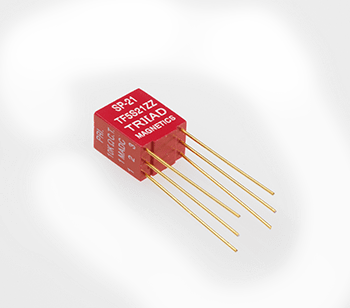
Studio-Grade Line Input & Isolation Transformers
Designed for professional mixing consoles, mastering processors, and audio interfaces requiring transparent signal pass-through and supreme ground isolation.
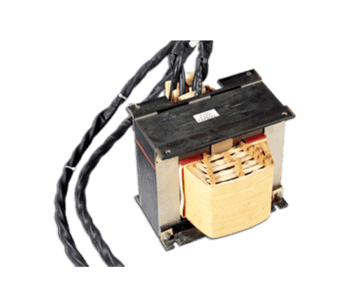
Low-Distortion Microphone & Line Matching Transformers
Ideal for high-gain microphone preamplifiers and instrument processing units requiring precise step-up ratios and ultra-low noise floors.
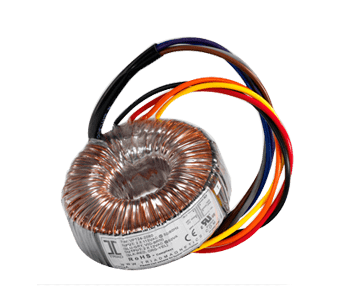
High-Level Output & Tube Drive Transformers
Engineered for high-drive output circuits, outboard analog compressors, and vacuum tube processing equipment delivering warm, musical harmonic balance.
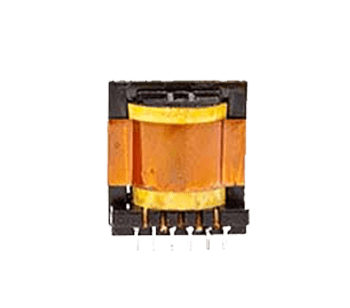
PC-Mount Compact Audio Processing Magnetics
Subminiature PC-board mounted transformers engineered for compact spatial envelopes, commercial public address systems, and Telecom audio interfaces.
For custom engineering requests, Triad Magnetics provides full electrical and mechanical prototyping services. Whether your application demands custom core laminations, specialized Faraday electrostatic shields, or mil-spec encapsulation, our engineering team collaborates directly with your R&D departments to craft tailored components.
Engineering Specifications & Technical Benchmark Data
When selecting an Audio Sound Processing Transformer, comparative analysis of core magnetic alloys and physical winding configurations is crucial. Below is an engineering benchmark matrix evaluating performance across primary core materials used by Triad Magnetics:
| Core Alloy Material | Permeability (μ) | Saturation Flux Density (Bmax) | Typical Low-Freq THD | Best Application Intent |
|---|---|---|---|---|
| 80% High-Nickel Permalloy (Mu-Metal) | Ultra-High (>100,000) | ~0.7 Tesla | Extremely Low (<0.001%) | Low-level line inputs, mic preamps, master isolation units. |
| 50% Nickel / 50% Iron Alloy | High (~20,000) | ~1.5 Tesla | Very Low (<0.005%) | Medium-level signal processing, dynamic range processors. |
| Grain-Oriented Silicon Steel (M6) | Moderate (~5,000) | ~2.0 Tesla | Low (Adds gentle warm harmonics at saturation) | High-power line outputs, tube amp output stages, PA drivers. |
| Amorphous / Cobalt Alloy | Very High (>80,000) | ~1.0 Tesla | Ultra-Low Across Ultrasonic Frequencies | Next-Gen High-Res Audio DAC/ADC reconstruction filters. |
Table 1: Material characteristics analysis for custom audio sound processing transformer design optimization.
Future Trends in Global Audio Transformer Procurement & AI Integration
As global procurement directors, OEM buyers, and hardware system architects look toward the next decade of sound processing technology, several key market shifts are re-shaping component selection:
1. Rise of AI-Powered Noise Cancellation & Hardware Pre-Filtering
While AI algorithms perform real-time speech enhancement and acoustic modeling, digital systems are sensitive to high-frequency common-mode switching noise from adjacent power supplies. Audio processing transformers are increasingly used as passive hardware pre-filters to preserve input dynamic range before ADC conversion.
2. High-Density Surface Mount (SMD) Audio Magnetics
Space constraints in modern compact audio interfaces and wearable acoustic monitors require smaller component footprints. The demand for ultra-compact SMT audio transformers capable of handling higher headroom without spatial saturation is growing rapidly.
3. Demand for Ultra-Wide Bandwidth (100kHz+) Performance
With high-resolution audio formats (32-bit / 384kHz sampling rates) becoming standard in professional studios, transformers must maintain phase linearity far beyond human audibility to prevent phase dispersion within the audible spectrum.
4. Supply Chain Resilience & Multi-Region Sourcing
Global procurement teams prioritize vendors with dual-manufacturing footprints. Sourcing magnetics from ISO-certified operations in both the USA and Southeast Asia guarantees supply chain stability against geopolitical disruptions.
Why Global Procurement Teams Choose Triad Magnetics
For over 75 years, Triad Magnetics has pioneered magnetics innovation—from powering legacy studio equipment during Hollywood's golden age to engineering high-reliability components for today's medical, aerospace, and pro-audio industries.
Our commitment to Experience, Expertise, Authoritativeness, and Trustworthiness (E-E-A-T) is demonstrated by our robust quality infrastructure and dual-shore production capabilities:
Frequently Asked Questions by B2B Audio Gear Purchasing Managers
Below are authoritative answers to common technical and procurement questions asked by engineering teams and global buyers regarding audio sound processing transformers.
Partner with Triad Magnetics for Custom Audio Transformer Manufacturing
Whether you require standard off-the-shelf catalog audio transformers or a fully customized magnetic design engineered for ultra-low distortion, our team of application engineers is ready to support your project from initial design to full volume production.
Inquire Now